Last reviewed:
The Mekong Delta is hot, humid, sunny and wet, often within the same hour. It is also a conservative rural region where you will visit at least one pagoda. Neither fact requires special equipment — but both punish the wrong choices, and the most common mistake is dressing for a beach.
The short list
| Wear | Loose, light, quick-drying long sleeves and long trousers or a below-knee skirt. Covered shoulders and knees for pagodas. A hat with a brim. |
|---|---|
| On your feet | Sandals with a heel strap, or trainers you do not mind getting wet. Nothing that slips off — jetties are wet planks. |
| Always carry | Sunscreen, insect repellent, 1–2 litres of water, small-denomination Vietnamese dong, a phone battery pack. |
| Wet season extras | A poncho or light rain shell, a dry bag or zip-lock for your phone, a second pair of socks. |
| Do not bother with | Jeans, heavy boots, an umbrella on a boat, formal clothing, a large day pack. |
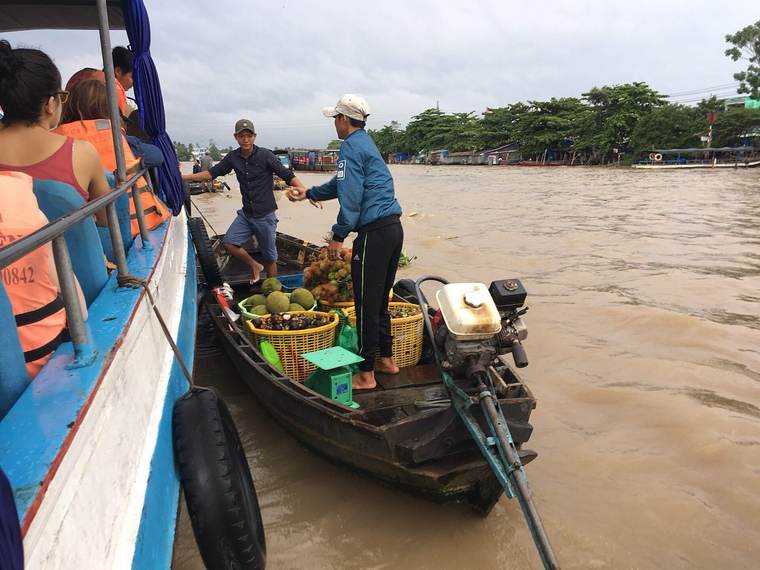
| The one thing people forget | Small notes. Sampan rowers, musicians and noodle boats are cash-only and nobody has change for a 500,000 VND note. |
Clothing, and why long sleeves win
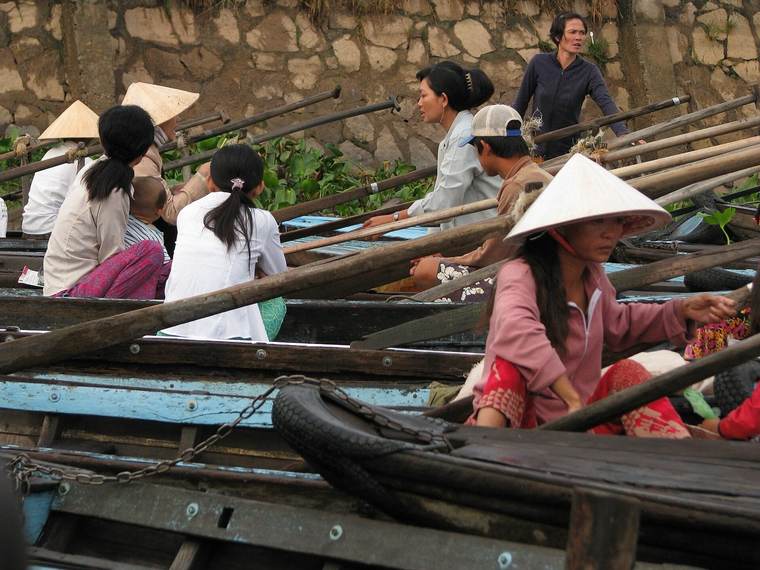
The instinct in 33 °C heat is to wear as little as possible. In the delta that is the wrong call, and you can verify it by looking at anyone working outdoors: long sleeves, long trousers, a conical hat or a cloth wrapped over the face.
- Long sleeves in light fabric beat sunscreen for four hours on an open boat. Linen, cotton or a technical shirt all work; anything tight or synthetic and non-breathable does not.
- Loose trousers or a long skirt keep the sun off, satisfy pagoda dress codes and protect against mosquitoes at dusk. Lightweight travel trousers are ideal.
- Shorts are fine on the boat and in town, but carry something to cover your knees for temple stops.
- Shoulders covered is the pagoda requirement most often missed. A light scarf in your bag solves it in three seconds.
- Avoid jeans. They are hot, they take a full day to dry, and they are miserable when a canal splashes.
- Bring one change of shirt for a full day out. You will sweat through the first by noon.
Buy a conical hat (nón lá) at the first market you see. It costs almost nothing, it works better in sun and rain than a baseball cap, it is comfortable in heat because it does not touch your head, and it packs flat against your back on a strap.
Footwear
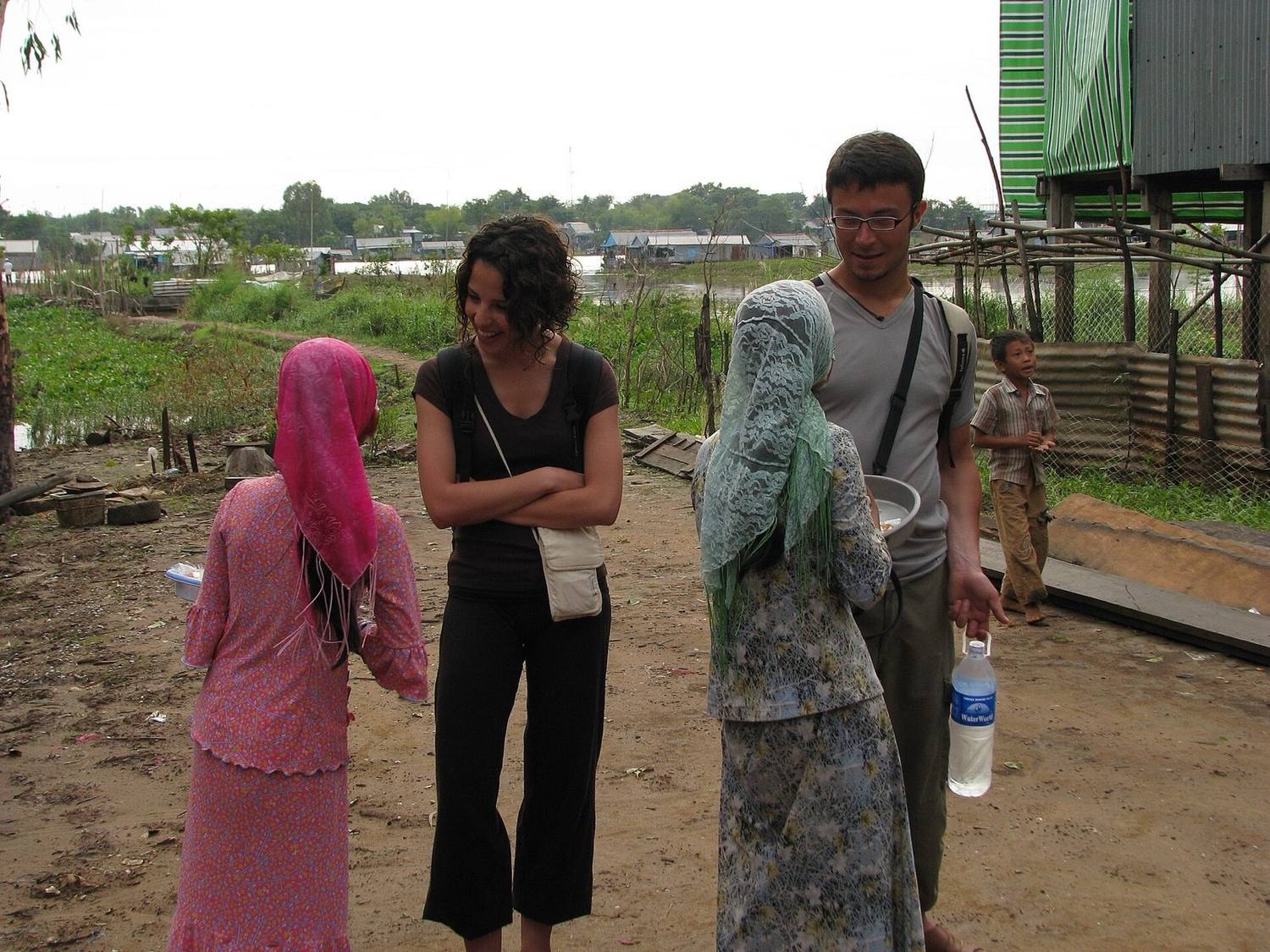
Almost every delta itinerary involves stepping from a jetty into a boat, and a lot of those jetties are two planks and a rope. Boat decks are wet. Canal banks are mud.
- Best: sport sandals with a heel strap (Teva-style), or older trainers you accept will get wet.
- Acceptable: flip-flops, provided you can take them off to board and you accept losing one overboard is possible.
- Bad: smooth-soled leather shoes, heels, anything you would be upset to ruin.
- For the Cu Chi Tunnels, if you are combining that trip: closed shoes only. See the Cu Chi guide.
- For cycling days, trainers. Pedals in the delta are plastic and unforgiving of bare toes.
Sun, heat and water
The delta is at 9–10° north. The sun is close to vertical at midday, and there is no shade at all on the river.
- Sunscreen SPF 30–50, applied before you leave and again after the first boat leg. Water reflects, so you will burn under your chin and behind your ears.
- A brimmed hat, not a cap. Ears and neck burn fastest.
- Sunglasses — glare off brown water is severe and constant.
- Two to three litres of water per day. Sold everywhere for pocket change; there is no need to carry it all from Saigon.
- Electrolytes if you sweat heavily. Oresol sachets are available in every pharmacy for a few thousand dong.
- Plan around the heat, not through it. Locals rest between 11:00 and 15:00 for good reason.
Insects
Mosquitoes are present year-round and worse in the wet and floating seasons (roughly May to November), particularly at dawn, dusk and in shaded canals and orchards.
- Repellent with DEET or picaridin. Apply before the sampan leg, not after.
- Long sleeves and trousers at dusk — the simplest protection there is.
- Homestays supply mosquito nets. Use them, and tuck them under the mattress.
- Dengue is present in southern Vietnam. There is no prophylactic; bite avoidance is the whole strategy. Check current health advice for your own country before travelling.
Rain, if you are travelling May to November
- A poncho beats an umbrella on a boat, on a bicycle and on the back of a motorbike. Sold at every market and roadside shop for a dollar or two.
- A dry bag or zip-lock for phone, passport and camera. Spray comes over the bow even on clear days.
- Quick-drying everything. Cotton takes a full day to dry in delta humidity.
- Rain is usually an afternoon event lasting under an hour. It rarely cancels a morning.
Pagoda and temple dress code
Almost every delta itinerary includes at least one temple — commonly Vinh Trang in My Tho, or a Khmer pagoda further south. The rules are simple and consistently applied.
- Shoulders covered. No vests, no strappy tops.
- Knees covered. Shorts and short skirts are the usual problem.
- Remove shoes before entering shrine buildings; there will be a rack or a step where everyone else's are.
- Do not point your feet at a Buddha image when sitting.
- Ask before photographing monks or people at prayer.
- Hats off inside.
A light long-sleeved shirt and a scarf in your day bag cover every situation without needing to change clothes.
Money and documents
- Cash in small notes. 10,000, 20,000, 50,000 and 100,000 VND. Card acceptance outside hotels and larger restaurants is close to zero.
- ATMs are plentiful in Can Tho and My Tho, sparse in villages. Withdraw before you leave the city.
- Passport — carry it if you are crossing to Cambodia; otherwise a photo on your phone plus the physical copy in the hotel safe is normal practice.
- Travel insurance — check it covers boat travel and cycling, which some basic policies exclude.
- Offline maps. Mobile data is good in the delta but canal-side lanes are poorly signposted.
What to leave behind
- A big backpack. Day trips involve boats and narrow gangways. A small shoulder bag or dry bag is enough.
- Jeans, denim jackets, heavy boots.
- Drone, unless you have checked local rules. Restrictions around waterways, border provinces and military sites are real.
- Expensive jewellery. Not because of crime, but because losing it overboard is genuinely easy.
- An umbrella as your only rain plan. On a boat, in wind, it is useless.
Frequently asked questions
What should I wear on a Mekong Delta tour?
Loose, light, quick-drying long sleeves and trousers, sandals with a heel strap or old trainers, and a brimmed hat. Cover shoulders and knees for pagoda stops. Avoid jeans and anything you would mind getting wet.
Do I need long sleeves in the Mekong Delta?
They are the better choice despite the heat. There is no shade on the river, the sun is near vertical at midday, and light long sleeves protect against both sun and mosquitoes more reliably than sunscreen. It is what everyone working outdoors wears.
What shoes are best for a Mekong Delta boat trip?
Sport sandals with a heel strap, or trainers you accept will get wet. Jetties are often unsecured planks and boat decks are wet, so anything smooth-soled or easily lost is a poor idea.
Do I need to cover up for temples in the Mekong Delta?
Yes — shoulders and knees covered at every pagoda, shoes removed before entering shrine buildings, hats off inside. Carrying a light scarf and a long-sleeved shirt in your day bag covers it without changing clothes.
Are there a lot of mosquitoes in the Mekong Delta?
Yes, especially at dawn and dusk and in the wet and floating seasons from roughly May to November. Use repellent with DEET or picaridin, cover up in the evening, and use the mosquito net at homestays. Dengue is present in southern Vietnam, so bite avoidance matters.
Should I bring cash to the Mekong Delta?
Yes, in small denominations. Sampan rowers, musicians, market boats and village shops are all cash-only, and nobody carries change for large notes. Withdraw in Can Tho or My Tho before heading into the villages.
What should I bring on a rainy-season Mekong Delta trip?
A poncho rather than an umbrella, a dry bag or zip-lock for phone and documents, quick-drying clothes and a spare pair of socks. Rain is usually a single heavy afternoon downpour rather than continuous, so mornings are rarely affected.