Last reviewed:
Standard delta tours move you by coach and drop you onto a boat for twenty minutes. Bike and kayak tours invert that: you spend the day at three to twelve kilometres an hour, on lanes and canals that a tour bus cannot reach, and you see the delta at the speed it actually operates. It is also the cheapest way to escape the itinerary everyone else is on.
Quick summary
| Price from | Half-day cycling from about US$25–45. Full-day cycling with boat legs and lunch US$45–90. Kayak or canoe sessions US$25–50. Multi-day cycling tours from roughly US$150 per day including accommodation. |
|---|---|
| Difficulty | Easy. The delta is flat — total elevation gain on a typical route is close to zero. Heat and humidity are the limiting factors, not fitness. |
| Typical distance | 15–25 km on a half day, 30–45 km on a full day, 40–70 km per day on multi-day tours. |
| Best hours | 06:00–10:00 and after 16:00. Riding between 11:00 and 15:00 in the delta is genuinely unpleasant. |
| Best season | November–March. Dry, cooler, firm surfaces. April–May is the hottest; June–October brings afternoon storms. |
| Where | Ben Tre for the best lanes, An Binh island (Vinh Long) for orchards, Cai Be for canals, Can Tho's islands for a short ride after the market. |
See cycling and kayak tours with live prices
Why the delta suits two wheels
Almost every canal in the Mekong Delta has a raised path along at least one bank — the dyke that keeps the water where it belongs. Over the past two decades most of these have been surfaced with concrete just wide enough for a motorbike. The result is a lattice of thousands of kilometres of paved, flat, shaded, car-free lanes running directly through villages, orchards and yards.
You cannot drive a coach on them. You can barely drive a car. On a bike they are perfect: five metres from the water, under fruit trees, past schools and hammocks and drying rice, with a bridge to cross every kilometre or so. The traffic is schoolchildren, motorbikes carrying improbable loads, and dogs.
- Elevation: effectively none. The highest ground for a hundred kilometres is a bridge.
- Surfaces: concrete lanes, occasional packed earth, some very narrow footbridges you will walk across.
- Distances between villages: short. There is always somewhere to buy water within a couple of kilometres.
- The real difficulty: heat, humidity and sun. Plan around them and the riding is easy for anyone who cycles occasionally at home.
Which active tour to pick
Half-day ride
≈ US$25–45
- 15–25 km, mostly Ben Tre or An Binh
- 06:30 or 15:30 start
- Bike, helmet, guide, water included
- Not enough for a full day out of Saigon
Best for: travellers already staying in the delta who want the good hours without a whole day committed.
Full-day bike + boat
≈ US$45–90
- 30–45 km split across two rides
- Boat transfers between islands
- Lunch at a garden house
- Support vehicle on most listings
Best for: most people. Combines the canal boat everyone wants with lanes almost nobody sees.
Kayak / canoe session
≈ US$25–50
- 2–4 hours on small canals
- Sit-on-top or open canoe, easy for beginners
- Quiet — no engine at all
- Not available everywhere; ask before you travel
Best for: anyone who found the 20-minute sampan ride too short.
Multi-day cycling tour
from ≈ US$150 / day
- 40–70 km per day, 2–6 days
- Saigon → Ben Tre → Vinh Long → Can Tho → Chau Doc
- Support van, hotels or homestays, all meals
- Fixed departure dates on most operators
Best for: cyclists who want the delta as a route rather than a day out.
Routes worth riding
Ben Tre canals — the classic
Flat lanes between the Tien and Ham Luong rivers, through coconut groves and past brick kilns, with two or three small ferry crossings. Twenty to thirty kilometres of it can be strung together without touching a main road. Best cycling in the delta, and a half-day is enough to feel it.
An Binh island, Vinh Long — orchards
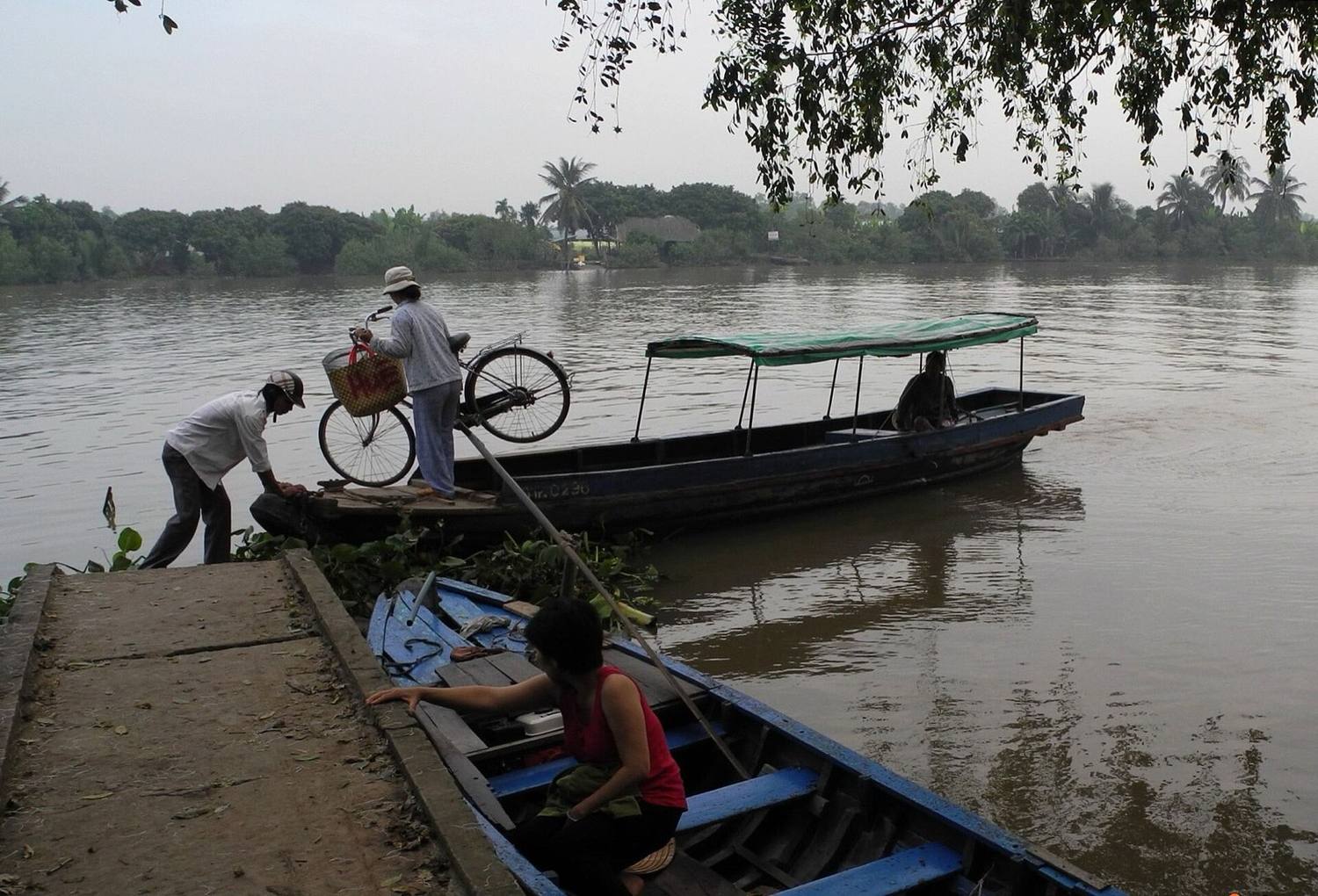
An island of fruit gardens opposite Vinh Long town, reached by a five-minute ferry. Longan, rambutan, pomelo and durian orchards, homestays among them, and lanes narrow enough that you ride single file. Ideal for a morning ride from a homestay.
Cai Be to Vinh Long — canals and workshops
A longer, more varied route linking rice-paper workshops, brick kilns and riverside hamlets. Usually done as a full day with a boat transfer in the middle.
Can Tho islands — the post-market ride
Son islet and the lanes around Phong Dien, done after Cai Rang floating market. You are already awake at 06:00 and the light is perfect; two hours of riding is the natural continuation.
Ben Tre to Tra Vinh — for multi-day riders
Quieter still, with Khmer pagodas appearing among the coconut groves. Rarely on group itineraries; ask a private operator.
Kayaking and canoeing, realistically
Kayaking in the Mekong Delta is a smaller, newer scene than cycling, and it works best on the secondary canals rather than the main channels — the big rivers carry serious cargo traffic and strong currents, and are not a place to paddle.
- Where it works: the canal networks around Ben Tre, Vinh Long and Cai Be; the flooded forest at Tra Su near Chau Doc during high water.
- What you get: two to four hours in total silence, at eye level with the water, in canals a motor launch cannot enter.
- Difficulty: easy. Flat water, short distances, sit-on-top kayaks or stable open canoes. No experience needed.
- What to check: life jackets, sun cover, and whether a support boat accompanies the group. Ask about tides — a canal that is paddleable at 07:00 may be mud by 10:00.
- Do not paddle the main Mekong channels independently. Barges, currents and near-zero visibility make it genuinely dangerous.
Kayak availability in the delta fluctuates — operators add and drop the format seasonally. If paddling is the reason you are coming, confirm it is running on your dates before you book flights or hotels, and have a sampan-and-cycling plan as a fallback.
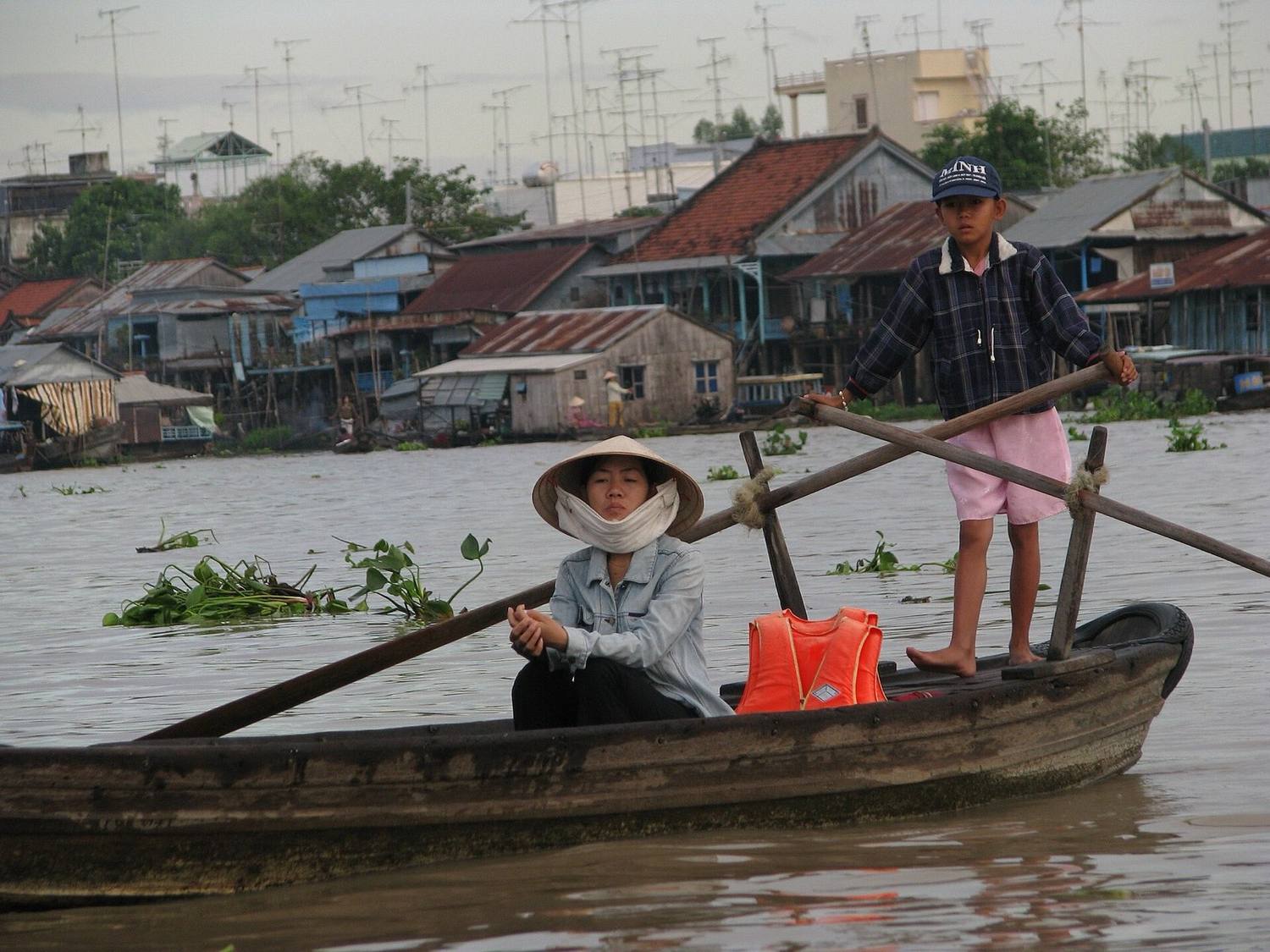
Timing is everything
Time of day
- 06:00–09:00. The window. Cool, low sun, villages at their busiest, dogs still asleep.
- 09:00–11:00. Workable with shade and water.
- 11:00–15:00. Avoid. This is when heat exhaustion happens, and every local is having a nap for a reason.
- 16:00–18:00. Second window. Golden light on the canals; be off the lanes before dark, since they are unlit and the bridges are narrow.
Time of year
- November–March: dry, cooler, firm surfaces. The right season.
- April–May: hottest months of the year. Ride at dawn or not at all.
- June–October: afternoon storms; mornings are usually fine. Lanes get slick and some low sections flood.
- September–November: high water. Some dyke lanes go under; kayaking at Tra Su is at its best.
Practical advice
- Check the bikes before you book. Good operators run hybrids or hardtails with working gears and give you a helmet. Cheap ones supply single-speed city bikes with soft tyres, which is fine on concrete lanes and miserable anywhere else.
- Ask if there is a support vehicle. On a full day in the delta heat, the option to stop riding matters more than you expect.
- Ride single file and ring your bell at every blind corner. Motorbikes come fast around bends and the lanes are two metres wide.
- Walk the monkey bridges. Single-bamboo footbridges with one handrail are a delta institution and not a cycling surface.
- Drink more than you think. Two litres on a half day, three on a full one. Bottled water is sold in every hamlet.
- Cover up rather than stripping down. Light long sleeves beat sunscreen in this humidity, which is why every farmer in the delta wears them.
- Bring your own saddle or padded shorts if you are riding multiple days. Rental saddles are universally terrible.
How to save
- Rent a bike locally. Homestays in Vinh Long, Ben Tre and Cai Be lend or rent bikes for a few dollars a day. With a downloaded offline map you can ride the same lanes a guided tour uses.
- Ride from a homestay, not from Ho Chi Minh City. Full-day tours from Saigon spend four hours in a van before the wheels turn.
- Book half-days. Most of the value is in the first three hours; the afternoon session is usually the weaker one.
- Bring your own helmet if you are fussy about fit — rental helmets are basic.
- Groups of four should compare a private guided ride against four group seats; the private version is often cheaper and lets you set the departure time.
Where to start
- Ben Tre — 85 km from Ho Chi Minh City, 2–2.5 h by coach. The best base for riding.
- Vinh Long — 135 km, 2.5–3 h. Ferry to An Binh island and the homestay belt.
- Cai Be — 110 km, roughly 2.5 h. Canals and workshops.
- Can Tho — 170 km, 3–4 h. Ride after the floating market.
Distances and transport detail are on the Can Tho, My Tho and Ben Tre guide.
Frequently asked questions
Is cycling in the Mekong Delta difficult?
Physically, no — the terrain is flat and the lanes are paved and almost car-free. The difficulty is heat and humidity, which is why almost all tours ride between 06:00 and 10:00 and again after 16:00. Anyone who cycles occasionally at home will manage a 25–40 km day.
How much does a Mekong Delta cycling tour cost?
Half-day rides run about US$25–45, full days with boat transfers and lunch US$45–90, and multi-day supported tours from roughly US$150 per day including accommodation and meals.
Where is the best cycling in the Mekong Delta?
Ben Tre, for the density of shaded, paved, car-free dyke lanes between the Tien and Ham Luong rivers. An Binh island near Vinh Long is a close second for orchard riding, and the lanes around Phong Dien make a good ride after the Cai Rang market morning.
Can you kayak in the Mekong Delta?
Yes, on the canal networks around Ben Tre, Vinh Long and Cai Be, and at the Tra Su flooded forest during high water. The main Mekong channels are not suitable for paddling — they carry heavy cargo traffic and strong currents. Availability varies seasonally, so confirm before you travel.
What is the best time of year for cycling in the delta?
November to March: dry, cooler and with firm surfaces. April and May are the hottest months of the year, and June to October brings afternoon storms — mornings are usually still rideable.
Do I need my own bike?
No. Every guided tour supplies a bike and helmet, and homestays in Vinh Long, Ben Tre and Cai Be rent them cheaply. Multi-day riders often bring their own padded shorts or saddle, because rental saddles are basic.
Are cycling tours suitable for children?
Generally from about age 10 on quiet dyke lanes, and younger with a child seat or trailer on private tours. The limiting factors are heat and the narrow bridges rather than the distance. Discuss it with the operator when booking rather than on the day.