Last reviewed:
Before roads reached the delta's villages, everything moved by water — and the places where boats met to trade became markets. Cai Rang, six kilometres downstream from Can Tho, is the biggest survivor. Several hundred boats still gather there most mornings, wholesalers selling to retailers, hull to hull, before the heat arrives. Get there at 05:45 and it is one of the great sights of Southeast Asia. Get there at 09:30 and it is a handful of tourist boats photographing each other.
Quick summary
| Entry price | Free — there is no ticket. You pay only for the boat. Shared boat tours from about US$15–35 per person; private hire roughly US$20–35 per boat per hour. |
|---|---|
| Opening hours | Trading starts around 04:30–05:00, peaks 05:30–07:00, and largely finishes by 09:00. It runs every day, all year. |
| Book ahead? | Not essential — boats can be arranged at Ninh Kieu wharf or through your hotel the evening before. Organised tours from Can Tho are worth pre-booking in December–March. |
| Time to allow | 2 hours for Cai Rang alone; 4–5 hours for Cai Rang plus Phong Dien plus a workshop stop. |
| Getting there | Boat from Ninh Kieu wharf, Can Tho — about 30–40 minutes downstream. There is no useful land access. |
| Where to sleep | Can Tho. A day trip from Ho Chi Minh City cannot reach the market during trading hours. |
See floating market tours and live prices
How a floating market actually works
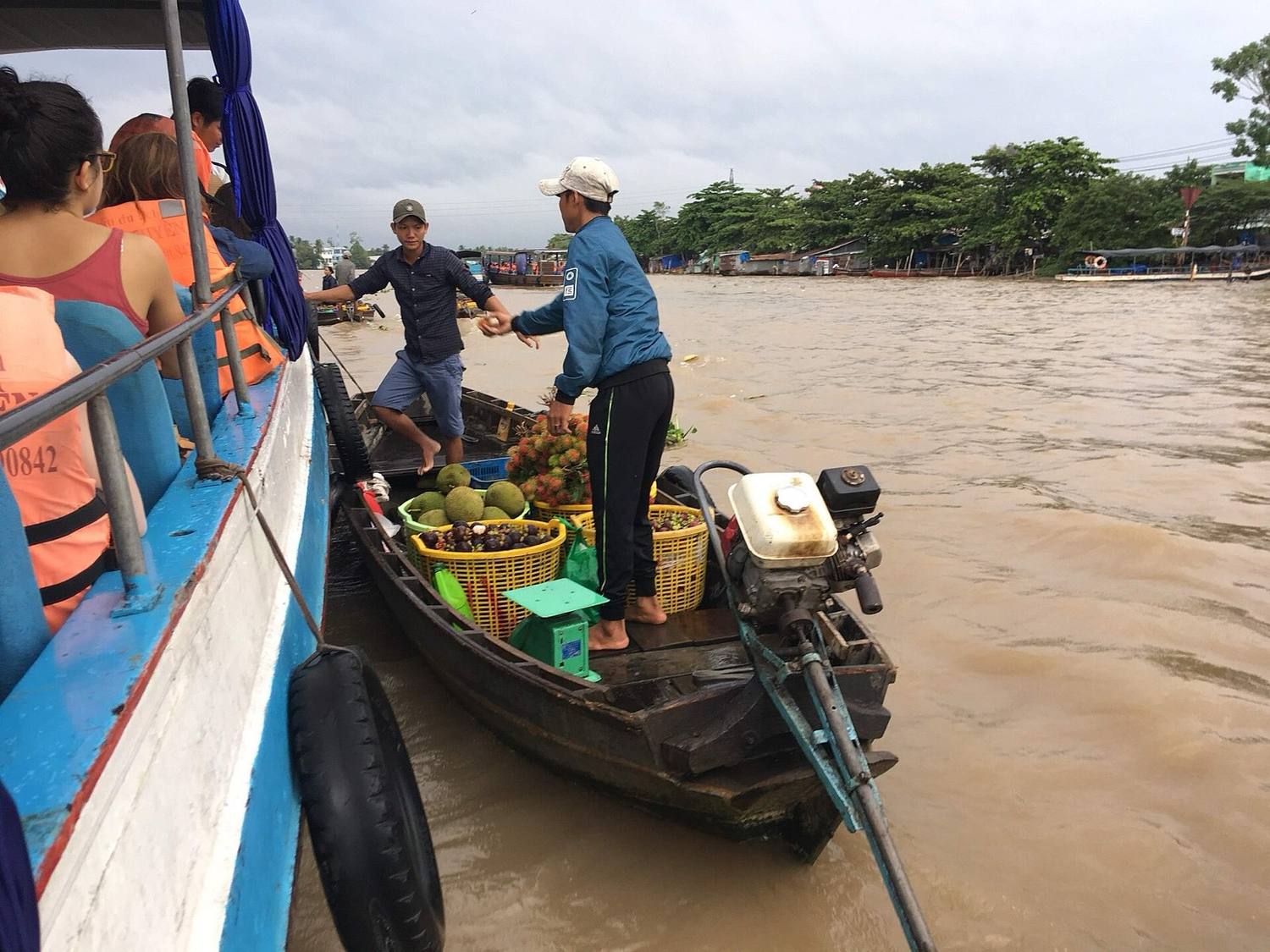
Cai Rang is wholesale. The big boats are the sellers — deep-hulled cargo craft that arrived overnight from farms across the delta, each loaded with one crop. The small boats are buyers: market traders, restaurant owners, and the retail boats that will sell in villages later that morning.
Because you cannot shout across fifty metres of water, sellers advertise visually. Each boat raises a tall bamboo pole at the bow — the cây bẹo — and ties a sample of its cargo to the top. Pineapples on the pole means a hold full of pineapples. Two items means two crops. A palm frond means the boat itself is for sale. Clothing on the pole means nothing is for sale — that is just the laundry.
Weaving between them are the service boats: coffee, hủ tiếu noodle soup, bánh mì, fuel, ice. These are the ones you will actually buy from. A bowl of noodles handed across from one moving boat to another, at 06:00, on brown water, is the memory people take home.
Ask your boatman to pull alongside a noodle boat and stop the engine. Most tourists take the photograph and move on; the market only makes sense when you sit still in the middle of it for twenty minutes with a coffee.
The markets, ranked honestly
Cai Rang — the one to see
Six kilometres from Can Tho on the Can Tho River. The largest wholesale floating market in the delta, and the only one operating at real scale every day. Boat traffic has declined as bridges and trucks have improved, and you will read that it is "not what it was" — that is true, and it is still remarkable.
- Arrive: 05:45–06:15. Leave Ninh Kieu at 05:00–05:15.
- Peak: 05:30–07:00.
- Traffic: highest of all the markets, including tour boats.
Phong Dien — the local one
About 20 km south-west of Can Tho, smaller, mostly retail rather than wholesale, and far less visited. It peaks slightly later, roughly 06:00–08:00, which makes it a natural second stop after Cai Rang. Most Can Tho boatmen will do both if you ask when you agree the price.
Cai Be — the diminished one
In Tien Giang, near Vinh Long, and on many day-tour itineraries from Ho Chi Minh City. The wholesale trade here has largely moved ashore; what remains is a modest cluster of boats. The surrounding area — rice-paper workshops, orchard islands, the riverside church — is genuinely worth a morning. The market alone is not.
Nga Nam — the remote one
In Soc Trang province, at a five-way junction of canals. Small, almost entirely local, and hard to reach without your own transport or a dedicated tour. Rewarding if you have three or more days in the delta and a taste for going further than the itinerary.
Long Xuyen — the quiet one
In An Giang, upstream toward Chau Doc. Genuinely uncommercial, still working, still almost tourist-free. Best combined with a Chau Doc leg rather than visited from Can Tho.
Any tour selling a "floating market" as part of a one-day trip from Ho Chi Minh City is not taking you to Cai Rang. The drive alone is three to four hours each way and the market is over by 09:00. What you will see is a small riverside trading dock — pleasant, but not the thing.
Ways to visit Cai Rang
Shared boat tour
≈ US$15–35 pp
- 05:00 departure from Ninh Kieu
- 10–20 passengers
- Usually adds a rice-noodle workshop
- Fixed route and turnaround time
Best for: solo travellers and couples who want it organised without paying private rates.
Private boat from the wharf
≈ US$20–35 / boat / hour
- Leave when you want — 05:00 is possible
- Stop where you want, for as long as you want
- Add Phong Dien for one extra hour
- Cheaper per head from three people
Best for: anyone with three or more people, and anyone who wants to sit still in the middle of the market.
Two-day tour from Saigon
≈ US$100–190
- Overnight in Can Tho or a homestay
- Cai Rang at sunrise on day two
- Transfers, meals and boats bundled
- Less flexible than doing it yourself
Best for: travellers with two days who do not want to arrange transport, hotels and boats separately.
Sampan add-on
≈ US$8–15 / boat
- Small rowed boat, after the market
- Enters canals the launch cannot
- 30–60 minutes
Best for: anyone who wants the quiet counterpart to the market's noise. Ask for it when you agree your price.
Timing is everything
| Time | What you get |
|---|---|
| 04:30–05:15 | Boats still arriving, dark, mist on the water. Leave the wharf now. |
| 05:30–07:00 | Peak trading. Maximum boats, best light, coolest air. This is the visit. |
| 07:00–08:00 | Still busy, warmer, tour boats arriving. Good for Phong Dien instead. |
| 08:00–09:00 | Thinning fast. Wholesale boats leaving or already empty. |
| After 09:00 | Effectively over. A few boats stay for tourists; the market does not. |
Best time of year
- December–April: dry, calm, easy. Peak fruit for pomelo, dragon fruit and citrus.
- May–August: mango, rambutan, longan and durian season — the boats are at their most colourful. Rain arrives in the afternoon, after the market.
- September–November: high water, dramatic skies, water lilies and linh fish appearing on the retail boats.
- The three days before Tet: flower boats fill the market — kumquat trees, yellow apricot, chrysanthemums stacked head-high. The most photogenic mornings of the year. Trading pauses for several days after Tet itself.
Best light for photographs
You are facing east into the sunrise from Ninh Kieu, which means the first twenty minutes at the market give you silhouettes and haze. After about 06:30 the light turns warm and side-on — the best window for faces and cargo. Ask the boatman to keep you on the shaded side of the big hulls and shoot across, not down.

Doing it properly
- Sleep in Can Tho. Not negotiable. Hotels near Ninh Kieu wharf put you five minutes from the boats.
- Book the boat the night before through your hotel, or walk down to the wharf at 17:00 and arrange it directly. At 05:00 you will be negotiating in the dark with whoever is left.
- Agree the route out loud: "Cai Rang, then Phong Dien, then back — four hours, total price X for the boat." Confirm it is per boat, not per person.
- Take the small boat over the big one if you have the choice. A ten-metre launch cannot get between the trading hulls; a five-metre one can.
- Buy something. A kilo of rambutan costs almost nothing and changes how people treat you. Point, hold up fingers, hand the money across.
- Go on to Phong Dien if you have the hour. It is what Cai Rang looked like before the tour boats.
- Skip the "floating market breakfast" upsell sold at hotels — the noodle boats cost about a dollar and are better.
How to save
- Split a private boat. Hire is per boat. Four people paying US$30 total beats four shared-tour seats at US$20 each, and you control the schedule.
- There is no entrance fee at any Mekong floating market. If someone asks you for a "market ticket", it is not official.
- Children ride free or at a token rate on private hire; shared tours generally discount them 30–50%.
- Skip the packaged breakfast and eat from a boat for a tenth of the price.
- Travel to Can Tho by coach, not by tour transfer — Futa and Phuong Trang run frequently from Ho Chi Minh City for a fraction of the price.
How to get there
To Can Tho
- Coach from Ho Chi Minh City: 3–4 hours on the expressway. Futa (Phuong Trang), Thanh Buoi and others run at least hourly from Mien Tay bus station and from District 1 offices.
- Private car: 3–3.5 hours, roughly US$70–110 one way depending on vehicle.
- Flight: Can Tho International Airport (VCA) connects to Hanoi, Da Nang, Phu Quoc and a few regional cities. From Saigon the road is faster.
- Two-day tour: transport, hotel and boat handled for you. See multi-day tours.
To the market
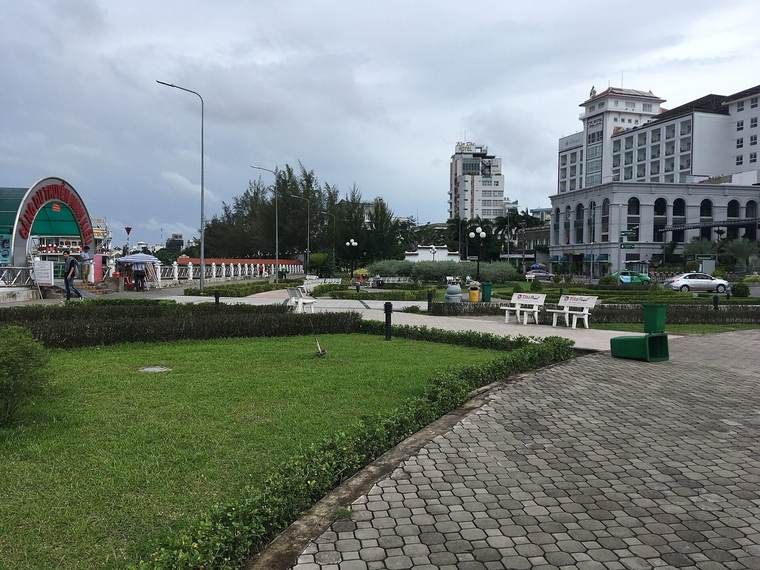
From Ninh Kieu wharf in central Can Tho, downstream, 30–40 minutes by motor launch. There is a road bridge and a small quay at Cai Rang, but arriving by land shows you a market from the bank — which misses the entire point. Take the boat.
What else is nearby
- Rice-noodle workshop — most market boat trips stop at a family workshop where hủ tiếu noodles are steamed on cloth and sun-dried on bamboo racks. Ten minutes, genuinely interesting.
- Bang Lang stork garden — about 45 km from Can Tho; thousands of storks roost at dusk.
- Binh Thuy ancient house — a 19th-century Franco-Vietnamese house in Can Tho, used as a location in the film The Lover.
- Ninh Kieu wharf and night market — the city's promenade; the obvious place for dinner before an early night.
- Son islet — a small island opposite Can Tho with fruit gardens and fish farms, easy to combine with a market morning.
Frequently asked questions
What time does Cai Rang floating market start?
Boats begin gathering around 04:30–05:00, trading peaks between 05:30 and 07:00, and the market has largely dispersed by 09:00. Leave Ninh Kieu wharf in Can Tho by 05:15 at the latest.
How much does it cost to visit Cai Rang floating market?
There is no entrance fee. You pay only for the boat: roughly US$15–35 per person on a shared tour, or US$20–35 per boat per hour for private hire. Adding Phong Dien usually costs one extra hour of boat time.
Can I visit Cai Rang on a day trip from Ho Chi Minh City?
Not during trading hours. Can Tho is three to four hours from Saigon and the market finishes by 09:00, so you would have to leave at about 01:00. Stay overnight in Can Tho, or book a two-day tour.
Is Cai Rang floating market still worth visiting?
Yes, if you arrive before 07:00. Trade has shrunk as roads improved and it is no longer the market of 1990s photographs, but several hundred boats still work most mornings — nowhere else in Vietnam comes close.
Which is better, Cai Rang or Phong Dien?
Cai Rang is bigger and more spectacular; Phong Dien is smaller, more local and has far fewer tourist boats. They are 20 km apart and peak at slightly different times, so the best answer is both, in that order, on one four-to-five-hour boat trip.
Do I need to book a boat in advance?
Not usually. Arrange it through your Can Tho hotel the evening before, or negotiate at Ninh Kieu wharf the previous afternoon. Organised group tours are worth pre-booking in the December–March high season.
What should I bring to the floating market?
Small-denomination Vietnamese dong, a light jacket for the pre-dawn boat, sun protection for after 07:00, and a phone torch for the wharf. Wear shoes with grip — jetties and boat decks are wet.
Can I buy things at the floating market?
Yes, and you should. The big boats sell wholesale by the sack, but the small service boats sell coffee, noodle soup, bánh mì and fruit in single portions. Have your boatman pull alongside; payment is cash, in dong.