Last reviewed:
Almost every Mekong Delta itinerary runs through My Tho, Ben Tre or Can Tho. They are 70, 85 and 170 kilometres from Ho Chi Minh City respectively, and that distance dictates everything: which tours reach them, how crowded they are, and whether you can be on a boat at 05:30. Pick the town first and the itinerary picks itself.
Quick summary
| My Tho | 70 km / 1.5–2 h from Saigon. The default day-trip stop. Islets, Vinh Trang Pagoda, wide river. Busiest with coaches. No reason to sleep here. |
|---|---|
| Ben Tre | 85 km / 2–2.5 h. Coconut country, narrow canals, flat cycling, far fewer buses. Good for a night if you want quiet; excellent as a day-trip upgrade. |
| Can Tho | 170 km / 3–4 h. The delta's largest city and the only base for Cai Rang floating market. Real restaurants, a riverside promenade, an airport. Sleep here. |
| If you have one day | My Tho or Ben Tre, on a tour from Ho Chi Minh City. |
| If you have two days | Anything, plus a night in Can Tho. This is the correct answer for most travellers. |
| If you have three or more | Can Tho, then push west to Chau Doc, Sa Dec or Tra Su. |
See tours to the delta towns and live prices
My Tho — closest, busiest, thinnest
Capital of the former Tien Giang province, on the north bank of the Tien River, and the first proper delta town on the road from Saigon. Founded in the 1680s by Chinese refugees from Taiwan, it grew into one of southern Vietnam's earliest trading ports. Today it exists on the tourist map for one reason: proximity.
What to see
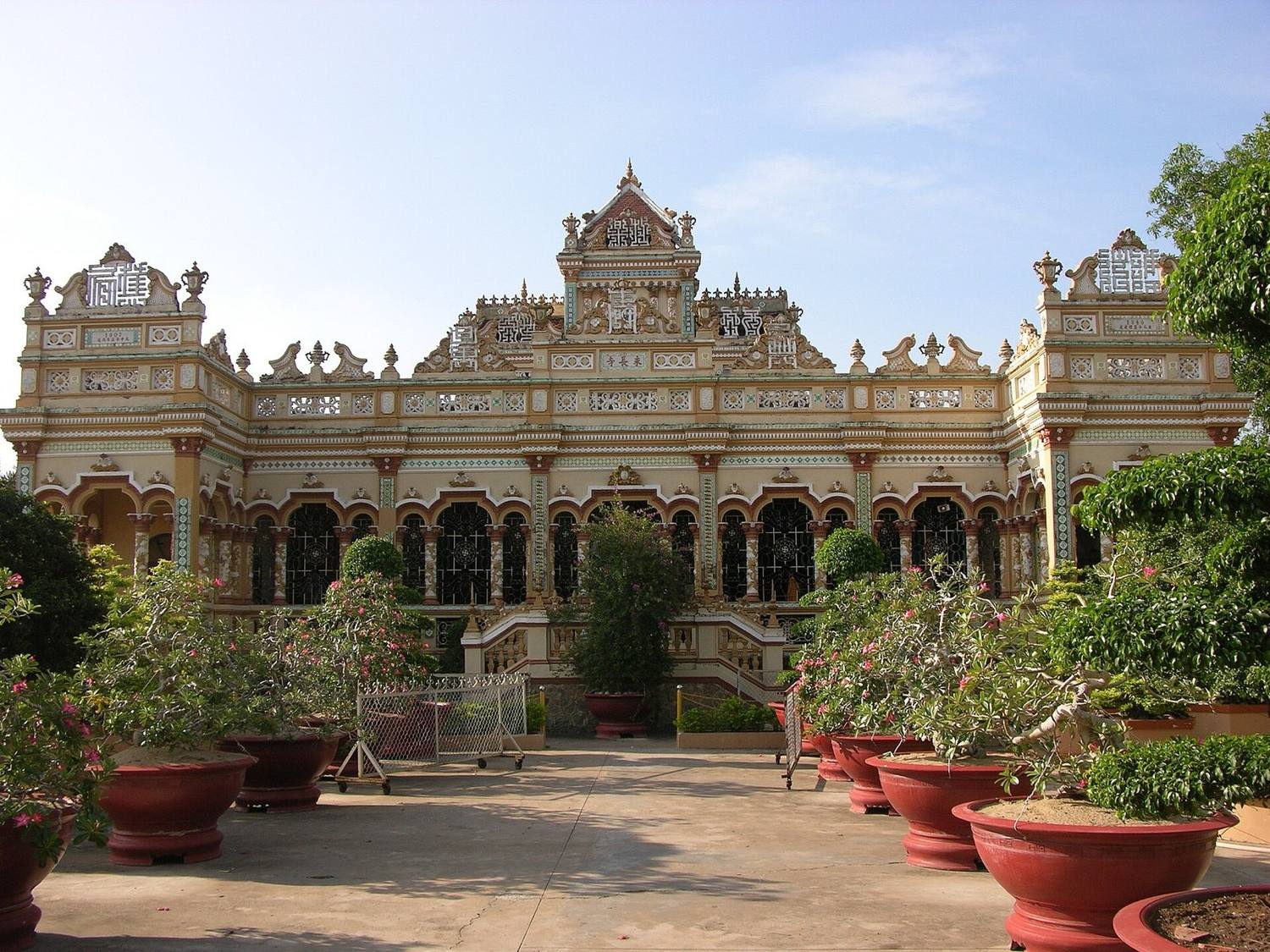
- Vinh Trang Pagoda. Built in the 19th century and rebuilt several times, mixing Khmer, Chinese, Vietnamese and French colonial detail in one facade. Large reclining, standing and laughing Buddha statues in the grounds. Free to enter, shoulders and knees covered.
- The four islets — Unicorn (Thới Sơn), Dragon, Phoenix and Tortoise. Unicorn is the largest and takes most of the day-tour traffic: fruit gardens, honey-bee tea, coconut candy, traditional music.
- Phoenix (Con Phung) island — the remains of the eccentric temple complex of the "Coconut Monk", who founded a syncretic religion here in the mid-20th century.
- My Tho market and the waterfront — an ordinary, functional Vietnamese river-town market. Pleasant at 06:00, unremarkable after.
Honest assessment
My Tho is where the industry put the day trip, not where the delta is at its best. The canals are wider and the boat traffic is heavier than at Ben Tre, and between 10:30 and 13:00 the islet jetties handle a great many coaches. It works perfectly well as an introduction. It is not worth an overnight.
Ben Tre — the coconut province
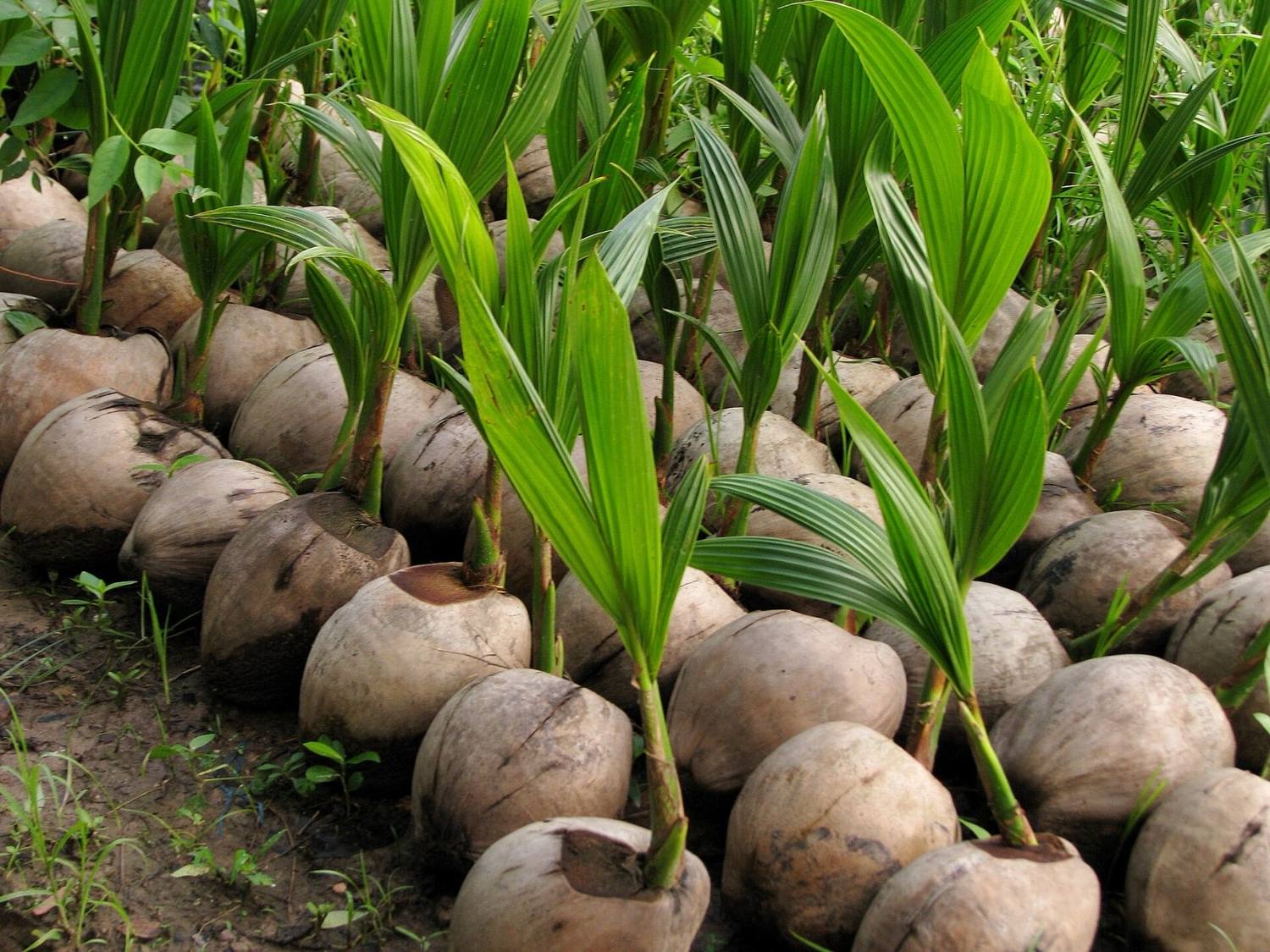
Across the Rach Mieu bridge from My Tho, on an island province between the Tien and Ham Luong rivers. Ben Tre produces a large share of Vietnam's coconuts, and it shows: coconut water, coconut candy, coir rope, coconut-shell handicrafts, coconut-wood furniture and coconut-husk charcoal are all made within a few kilometres of the town.
What to see
- The canals. Narrower than My Tho's, roofed with nipa palm, and the reason to come. Sampans here feel like the photographs.
- Coconut workshops. Candy pulled and cut by hand, coir spun into rope, husks fired into charcoal. Small-scale and genuinely working.
- Brick kilns along the Ham Luong — beehive-shaped, wood-fired, and increasingly rare.
- Cycling. The dyke roads are flat, shaded, paved and almost car-free. This is the best cycling in the delta — see bike and kayak tours.
- Monkey bridges (cầu khỉ) — single-bamboo footbridges with a handrail, mostly replaced by concrete but still there on smaller canals.
Honest assessment
Ben Tre gives you roughly 80% of what people imagine the Mekong Delta looks like, thirty minutes further from Saigon than My Tho and with a fraction of the coaches. If a day-tour listing includes Ben Tre, that is a meaningful signal about the operator. Worth a night if you want a homestay without going all the way to Can Tho.
Can Tho — the only real city
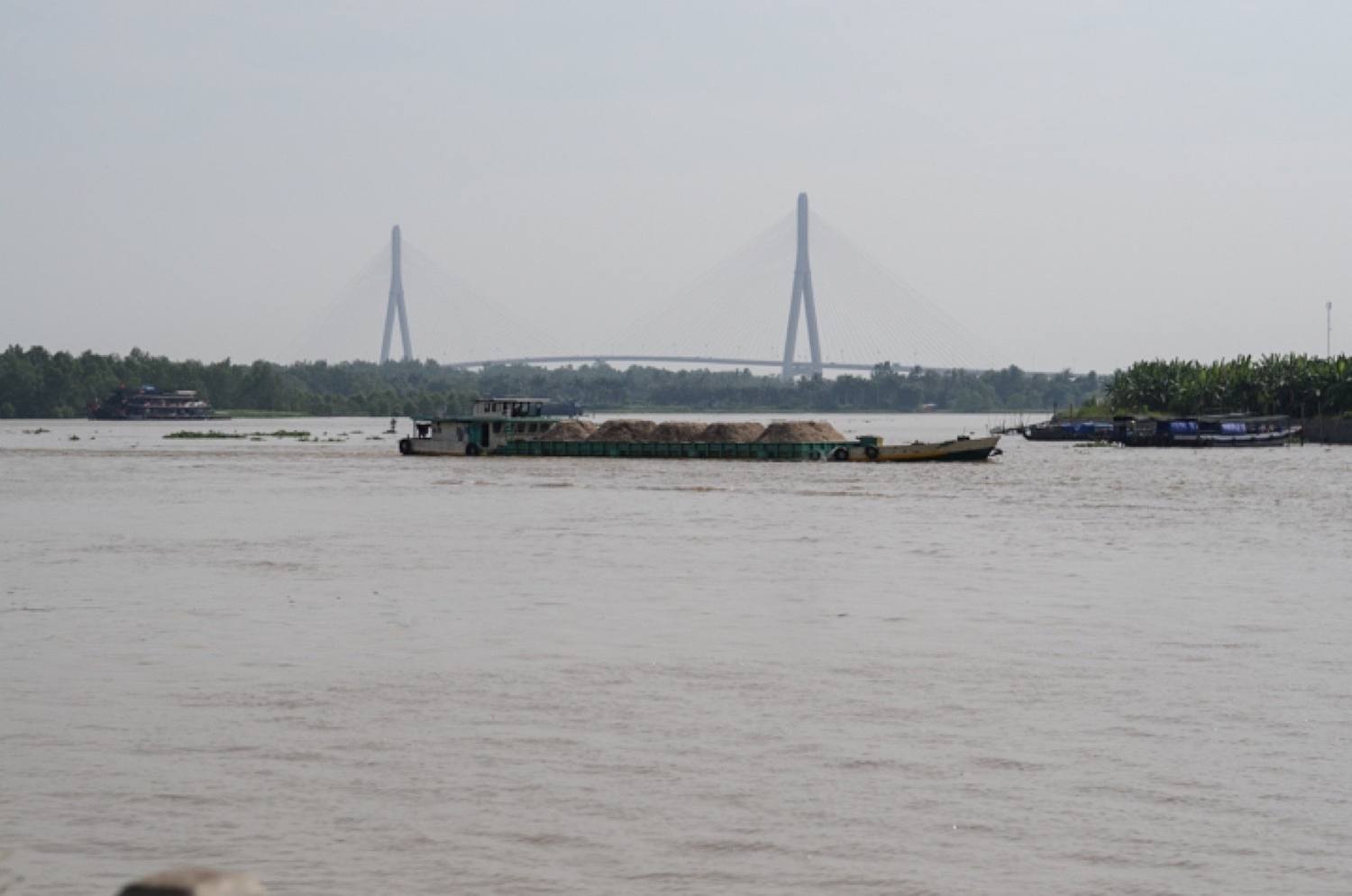
Roughly 1.2 million people, the delta's economic and academic centre, and its transport hub. Can Tho sits on the Hau (Bassac) River, the southern of the Mekong's two main Vietnamese branches, and is crossed by the Can Tho Bridge — for a period after opening in 2010, the longest main-span cable-stayed bridge in Southeast Asia.
What to see
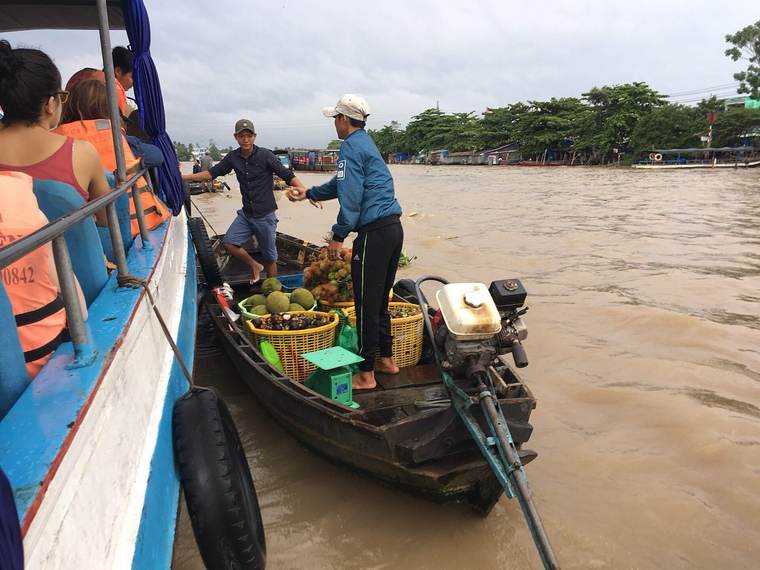
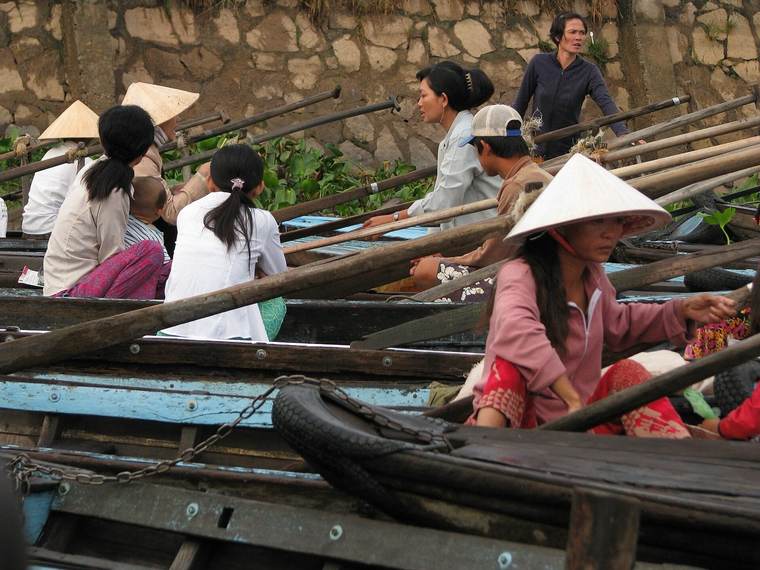
- Cai Rang floating market. Six kilometres downstream, peaking 05:30–07:00. The single best thing in the Mekong Delta and the reason Can Tho matters. Full detail on our floating markets guide.
- Phong Dien floating market — 20 km south-west, smaller, more local, later-peaking.
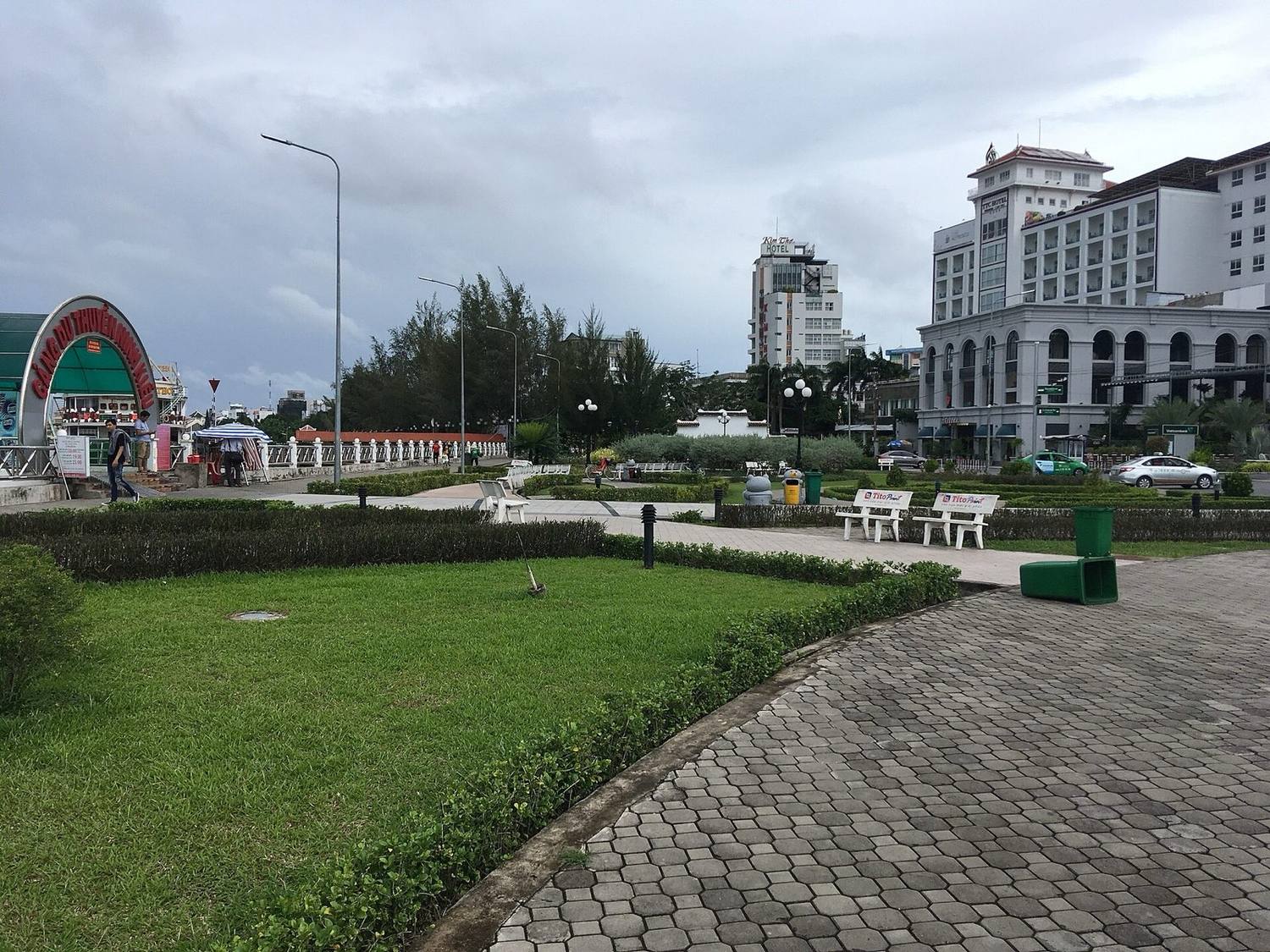
- Ninh Kieu wharf — the riverside promenade where boats leave, dinner happens and the city walks in the evening.
- Binh Thuy ancient house — an 1870s Franco-Vietnamese merchant house, used as a location in the 1992 film The Lover.
- Bang Lang stork garden — about 45 km out; thousands of storks return at dusk.
- Son islet — fruit gardens and fish farms directly opposite the city.
- Can Tho University and the surrounding student food streets, if you want to eat where the city eats.
Honest assessment
Can Tho is the base. Everything else in the delta is an excursion from it. It is also the only one of the three towns with a proper hotel range, a walkable centre, and an airport. If you are spending a night anywhere in the Mekong Delta, spend it here — unless you specifically want a village homestay, in which case Vinh Long or Ben Tre are better.
Side by side
| My Tho | Ben Tre | Can Tho | |
|---|---|---|---|
| From Ho Chi Minh City | 70 km, 1.5–2 h | 85 km, 2–2.5 h | 170 km, 3–4 h |
| Floating market | No | No | Yes — Cai Rang & Phong Dien |
| Canal quality | Wide, busy | Narrow, quiet | Mixed; best reached by boat |
| Coach traffic | Very high | Low | Moderate, concentrated at dawn |
| Cycling | Limited | Excellent | Good on the islands |
| Hotels | Basic | Homestays, small hotels | Full range incl. 4–5 star |
| Restaurants | Functional | Local, limited | Genuinely good |
| Worth an overnight? | No | Yes, for the quiet | Yes — the default |
Three more towns worth knowing
Vinh Long
Between My Tho and Can Tho, opposite the orchard island of An Binh. The classic homestay belt: family houses among fruit gardens, bonsai nurseries, brick kilns and a ferry that has run forever. Good for a night on a 3-day itinerary.
Sa Dec
In Dong Thap, an hour north-west of Vinh Long. A flower-growing town supplying much of southern Vietnam, at its best in the weeks before Tet. Also the setting of Marguerite Duras's The Lover; the Huynh Thuy Le house is open to visitors.
Chau Doc
Against the Cambodian border in An Giang. Floating fish farms under the houses, a large Cham Muslim community, the Ba Chua Xu temple at Sam Mountain, and the Tra Su cajuput forest nearby. The departure point for river boats to Phnom Penh — see our Mekong in Cambodia guide.
Timing is everything
- Can Tho: be on the water by 05:30. Everything else in the city can wait.
- Ben Tre: cycle between 06:30 and 09:00, before the heat. The canals are best in the same window.
- My Tho: if you are on a day tour you will be there at 10:30 with everyone else. Independently, arrive at 07:00 and you will have the islets nearly to yourself.
- Season: December–April is dry and easy everywhere. September–November brings high water, best for An Giang and Dong Thap, wettest for cycling.
- Market days: the floating markets run daily. Town markets are busiest 05:00–08:00 and largely done by 10:00.
Do not chain My Tho, Ben Tre and Can Tho in one trip unless you have four days. Two of the three is plenty. The strongest 2-day itinerary is a boat morning at Ben Tre or Cai Be, an overnight in Can Tho, and Cai Rang at dawn.
Getting there
| Route | Coach | Private car | Notes |
|---|---|---|---|
| Saigon → My Tho | ~2 h | 1.5 h | Frequent from Mien Tay bus station. |
| Saigon → Ben Tre | ~2.5 h | 2 h | Futa (Phuong Trang) runs regularly. |
| Saigon → Can Tho | 3–4 h | 3–3.5 h | Expressway most of the way; hourly departures. |
| My Tho → Ben Tre | 30 min | 25 min | Over the Rach Mieu bridge. |
| Ben Tre → Can Tho | 2–2.5 h | 2 h | Via Vinh Long. |
| Can Tho → Chau Doc | 3 h | 2.5 h | Onward to the Cambodian border. |
Can Tho International Airport (VCA) connects to Hanoi, Da Nang, Phu Quoc and several regional cities. From Ho Chi Minh City the road beats flying once you count check-in.
How to save
- Take the coach, not a tour transfer. Futa and Thanh Buoi run comfortable sleeper coaches to Can Tho for a fraction of a private transfer, with free shuttle pickup in central Saigon on many services.
- Sleep in Can Tho, not in a resort. Central hotels near Ninh Kieu cost less and save you a 04:30 taxi.
- Homestays in Vinh Long and Ben Tre typically include dinner and breakfast, which makes them cheaper overall than a hotel plus restaurants.
- Hire boats per boat, not per person — see the boat tour guide for what to agree before boarding.
- Eat at the market. Can Tho's night market and the university food streets serve full meals for a couple of dollars.
Frequently asked questions
Should I stay in Can Tho or My Tho?
Can Tho, unless you have only a single day. It is the only base within reach of Cai Rang floating market at trading hour, and it has the delta's best hotels and restaurants. My Tho is a day-trip stop, not an overnight town.
How far is Can Tho from Ho Chi Minh City?
About 170 km, which is three to four hours by coach on the expressway. Frequent services run from Mien Tay bus station and from central District 1 offices; a private car takes around three hours.
Is Ben Tre better than My Tho?
For canals, cycling and quiet, yes. Ben Tre is 30 minutes further from Saigon, its canals are narrower and shadier, and it receives far fewer coaches. My Tho's advantage is purely that it is closer.
Can I visit all three towns in one trip?
You can, but not well in under four days. A better two-day plan is Ben Tre or Cai Be on day one, an overnight in Can Tho, and Cai Rang floating market on day two.
What is there to do in Can Tho besides the floating market?
Ninh Kieu wharf and the night market, the Binh Thuy ancient house, Son islet's fruit gardens and fish farms, the Bang Lang stork garden, Khmer and Chinese temples in the centre, and the student food streets around Can Tho University.
Do I need a guide in the Mekong Delta towns?
Not for the towns themselves — they are easy to navigate and safe. A guide or a boatman who speaks some English becomes valuable on the water and in villages, where almost nobody speaks English and the interesting explanations are in Vietnamese.
Which delta town has the best food?
Can Tho, by a wide margin — it has the range and the competition. Look for sour fish soup with tamarind (canh chua), grilled elephant-ear fish, caramelised claypot fish, and bánh xèo pancakes eaten wrapped in mustard leaf.