Last reviewed:
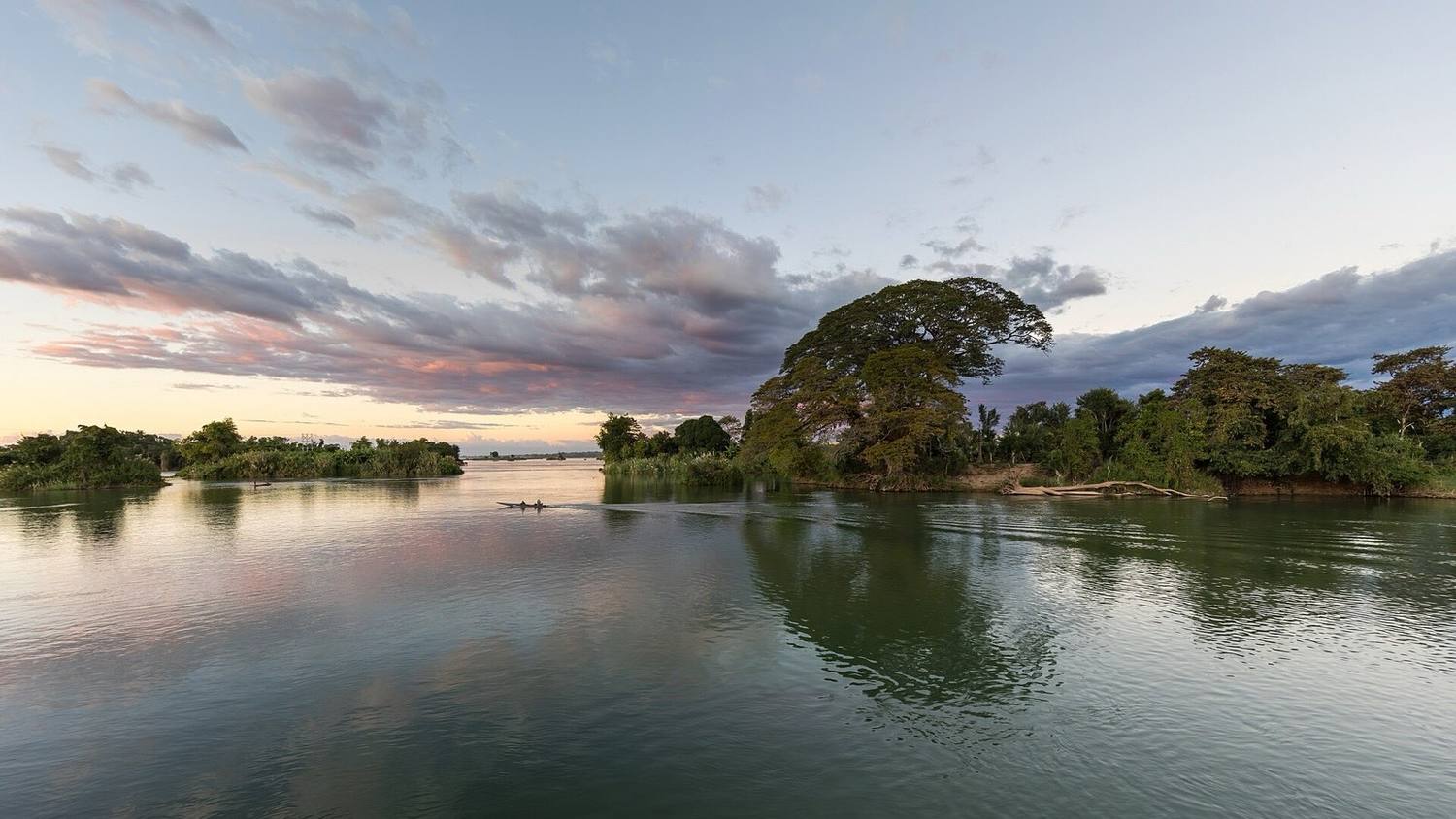
The Mekong runs the length of Laos, forms most of its border with Thailand, and carries a great deal of the country's traffic. Where Vietnam's delta is about density — canals, markets, people stacked on water — Laos is about distance: long empty reaches between forested banks, villages that face the river because there is no road behind them, and a stretch in the far south where the river spreads across ten kilometres and shatters into islands.
Quick summary
| Slow boat, Huay Xai → Luang Prabang | 2 days, overnight in Pakbeng. Public slow boat roughly US$30–45 per person; comfortable tourist boats and small cruise vessels cost considerably more. |
|---|---|
| Luang Prabang sunset cruise | About US$8–20 per person for 1–2 hours; private boat hire from roughly US$30–50. |
| Pak Ou Caves | Half-day boat trip upstream from Luang Prabang, roughly US$15–30 per person including the cave entrance. |
| Si Phan Don (4000 Islands) | Base on Don Det or Don Khon. Local boats and bicycles cost a few dollars; Khone Phapheng falls has a separate entrance fee. |
| Best season | November–February: dry, cool, clear. August–October: high water, greenest, waterfalls at maximum. March–May is hot and hazy from agricultural burning. |
| Avoid | Speedboats between Huay Xai and Luang Prabang. They are fast, extremely loud and have a poor safety record. |
See Mekong Laos tours and live prices
The slow boat to Luang Prabang
The classic Lao river journey: two days downstream from Huay Xai on the Thai border to Luang Prabang, with a compulsory overnight in the small river town of Pakbeng. Roughly 300 kilometres of river, no roads visible for hours at a stretch, forested hills, sandbanks, buffalo, and villages where the boat pulls in to drop a sack of rice.
How it works
- Day 1: depart Huay Xai in the morning, arrive Pakbeng in the late afternoon (around 6–8 hours depending on water level).
- Overnight in Pakbeng: a one-street town with guesthouses of every standard. Rooms can be booked on arrival, though booking ahead is wise in high season.
- Day 2: depart in the morning, arrive Luang Prabang late afternoon (7–9 hours).
Which boat
- Public slow boat. Cheapest, most crowded, wooden benches or repurposed minivan seats. Bring a cushion, snacks and a book. Genuinely enjoyable if you accept it for what it is.
- Tourist slow boat. Fewer passengers, padded seats, drinks and a toilet that works. Roughly double the public fare.
- Small cruise boat. Two-day trips with better lunches, guided village stops and pre-booked accommodation in Pakbeng. Several times the public fare.
- Speedboat. Six hours instead of two days, in a narrow hull at high speed with a helmet and ear protection. Avoid. The noise is punishing and the safety record is not good.
Board early on a public slow boat and take a seat near the middle — the stern is next to the engine and the bow gets the sun. Bring a small cushion or a rolled jacket; the benches are wood and the day is long.
Luang Prabang
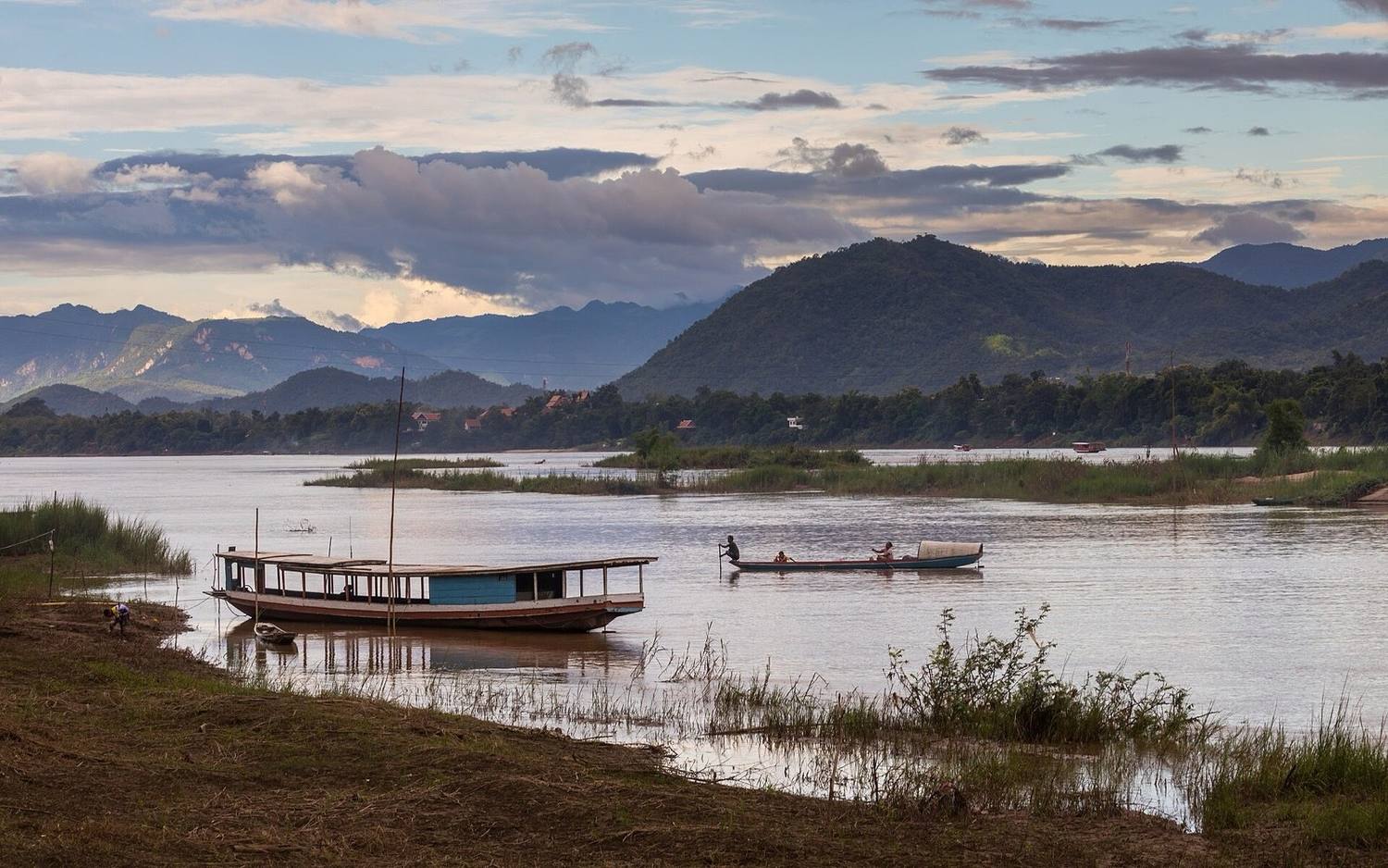
A UNESCO World Heritage town on a peninsula where the Nam Khan joins the Mekong — gilded monasteries, French shophouses, and a morning alms procession that draws the crowds it deserves and rather more besides. From the river, it is one of the loveliest approaches to any town in Asia.
- Sunset cruise. One to two hours upstream and back, timed for the sun dropping behind the far bank. The single easiest thing to book here.
- Pak Ou Caves (Tham Ting). Two caves in a limestone cliff at the mouth of the Nam Ou, packed with several thousand Buddha images left by pilgrims over centuries. Two hours upstream by boat; often combined with a whisky-distilling village.
- Kuang Si falls — the famous turquoise pools are inland, not on the Mekong, but they are the other thing everyone does here.
- Cross to Chomphet. A short ferry to the quiet bank opposite town, with hillside temples and almost nobody on them.
If you watch the morning alms round (tak bat), stand back, stay silent, do not use flash and do not buy sticky rice from street vendors to hand out. It is a religious observance, not a performance, and locals have asked visitors repeatedly to treat it as one.
Vientiane and the middle river
Laos's capital sits on a bend of the Mekong facing Thailand. The riverfront promenade and night market are the evening focus, and the sunsets across the water to the Thai bank are excellent. Buddha Park (Xieng Khuan), 25 km downstream, is a field of enormous concrete religious sculptures from the 1950s — strange, and worth the trip.
South of the capital the river passes Thakhek, Savannakhet and Pakse — provincial towns with French colonial cores, few tourists and easy access to the water. Pakse is the gateway to the Bolaven Plateau and to the far south.
Si Phan Don — the 4000 Islands
Where the Mekong widens to around ten kilometres in flood and breaks into a maze of channels, sandbars and permanent islands before dropping into Cambodia. This is the river's strangest and slowest place.
- Don Khong — the largest island, quiet, with a small town and good cycling.
- Don Det — the backpacker island: riverside bungalows, hammocks, sunsets, and a certain reputation.
- Don Khon — connected to Don Det by a French-built railway bridge, the remnant of a colonial portage line built to move boats past the rapids. Quieter and prettier.
- Li Phi (Somphamit) falls — a violent set of rapids on Don Khon, walkable from the bridge.
- Khone Phapheng falls — on the mainland near the Cambodian border. Not tall, but by volume the largest waterfall in Southeast Asia, and the reason the Mekong has never been navigable from the sea to China.
- Irrawaddy dolphins — historically seen in the deep pool at the Lao–Cambodian border. The trans-boundary population has collapsed; do not travel here expecting a sighting.
How to see the Lao Mekong
Public slow boat
≈ US$30–45
- Two days, Huay Xai → Luang Prabang
- Crowded, basic, memorable
- Overnight in Pakbeng at your own cost
- Hard seats, long days
Best for: independent travellers arriving overland from Thailand.
Tourist slow boat
≈ US$70–150
- Same route, padded seats, fewer people
- Working toilet, drinks on board
- Pakbeng accommodation often arranged
Best for: anyone who wants the two days without the endurance element.
Luang Prabang day boats
≈ US$8–30
- Sunset cruise or Pak Ou Caves
- 1–5 hours
- Bookable the day before
Best for: everyone passing through Luang Prabang. Low commitment, high return.
Southern Laos, 3–4 days
Varies
- Pakse → Don Det / Don Khon
- Khone Phapheng and Li Phi falls
- Bicycles, kayaks, hammocks
- Long overland transfers
Best for: travellers heading overland to Cambodia who want the river's most unusual stretch.
Timing is everything
- November–February. The best window: dry, cool, clear air, comfortable boat days.
- March–May. Hot, and often heavily hazed by agricultural burning in the north — views on the slow boat can be poor. River levels are low and boats occasionally reschedule.
- June–August. Rains begin. Green, dramatic, fewer travellers.
- September–October. Highest water. Khone Phapheng at maximum volume, Si Phan Don at its widest.
- Time of day: slow boats run in daylight only and do not travel after dark. Sunset cruises leave Luang Prabang around 17:00; in Si Phan Don, the west-facing bungalows on Don Det make the boat unnecessary.
Getting there
| Route | Time | Notes |
|---|---|---|
| Chiang Rai (Thailand) → Huay Xai | 2–3 h + border | Cross at the Friendship Bridge at Chiang Khong. |
| Huay Xai → Luang Prabang (slow boat) | 2 days | Overnight in Pakbeng. No night navigation. |
| Vientiane → Luang Prabang | ~2 h by train | The Laos–China railway has replaced most of the long bus journey. |
| Vientiane → Pakse | ~1 h flight / 8–10 h bus | Gateway to the far south. |
| Pakse → Don Det | 3–4 h + boat | Minivan to Nakasang, then a local boat to the island. |
| Si Phan Don → Cambodia | Half a day | Border at Nong Nok Khiene / Trapeang Kriel, then on to Stung Treng. |
How to save
- Book the slow boat at the pier, not through an agency in Chiang Mai. Agency packages bundle transfers and Pakbeng rooms at a substantial markup.
- Arrange Pakbeng accommodation on arrival outside the November–February peak — guesthouse owners meet the boat and rates are negotiable.
- Share a boat to Pak Ou Caves. Hire is per boat; the pier at Luang Prabang has other travellers doing the same thing every morning.
- Rent a bicycle on Don Det, Don Khon and Don Khong instead of taking tours — the islands are tiny and flat.
- Take the train Vientiane–Luang Prabang. It is cheap, fast and removes a punishing mountain bus ride.
- Skip the speedboat — it costs more than the slow boat and is the worst way to spend six hours in Laos.
Frequently asked questions
How long is the slow boat from Huay Xai to Luang Prabang?
Two days, with a compulsory overnight in Pakbeng. Day one runs roughly six to eight hours and day two seven to nine, depending on water levels. Boats do not travel after dark.
How much does the Mekong slow boat cost in Laos?
The public slow boat is roughly US$30–45 per person for the two days, excluding accommodation in Pakbeng. Tourist boats with padded seats and a working toilet cost about double, and small cruise boats considerably more.
Is the Mekong slow boat worth it?
Yes, if you have the two days and accept that it is a long sit. The middle stretch runs through country with no road access, and villages are still supplied by boat. Take a cushion, snacks and something to read.
Should I take the speedboat instead?
No. Speedboats cover the route in about six hours in a narrow hull at high speed, requiring a helmet and ear protection, and their safety record is poor. The time saved is not worth it.
What are the 4000 Islands in Laos?
Si Phan Don, in the far south, where the Mekong widens to about ten kilometres in flood and breaks into hundreds of channels and islands before entering Cambodia. Don Det, Don Khon and Don Khong are the main bases, and Khone Phapheng — the largest waterfall in Southeast Asia by volume — is nearby.
When is the best time to visit the Mekong in Laos?
November to February for dry, cool and clear conditions. March to May is hot and often hazy from agricultural burning. September and October have the highest water, which makes the waterfalls and Si Phan Don most impressive.
Can you see dolphins on the Mekong in Laos?
Historically yes, in the deep pool at the Lao–Cambodian border near Si Phan Don, but the trans-boundary Irrawaddy dolphin population has collapsed. Do not plan a trip around a sighting; the remaining animals are concentrated further south around Kratie in Cambodia.