Last reviewed:
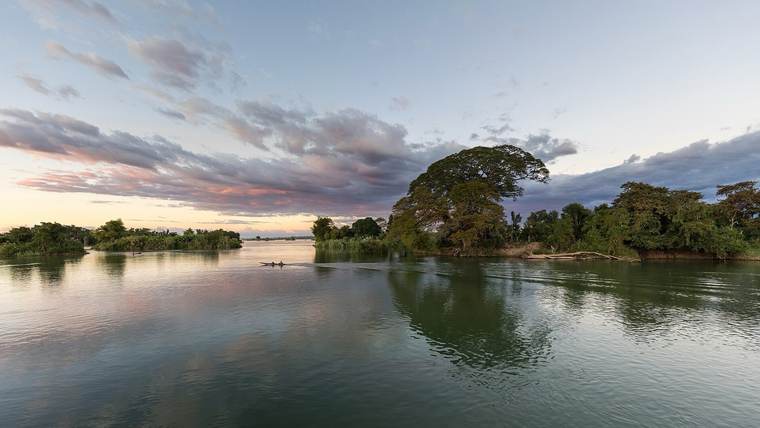
Cambodia gets roughly 500 kilometres of the Mekong, and it is the most eventful stretch of the whole river. It enters from Laos over the rapids below Khone Phapheng, runs past the dolphin pools at Kratie, meets the Tonle Sap and the Bassac at Phnom Penh, and leaves for Vietnam as two rivers instead of one. Almost nobody visiting Angkor sees any of it.
Quick summary
| Phnom Penh sunset cruise | From roughly US$5–15 per person for a shared 1–2 hour cruise from Sisowath Quay; private boats around US$25–50 for the boat. |
|---|---|
| Kratie dolphin boat | Shared boat at Kampi, roughly US$7–12 per person; whole boat around US$25–35. Best at dawn or late afternoon. |
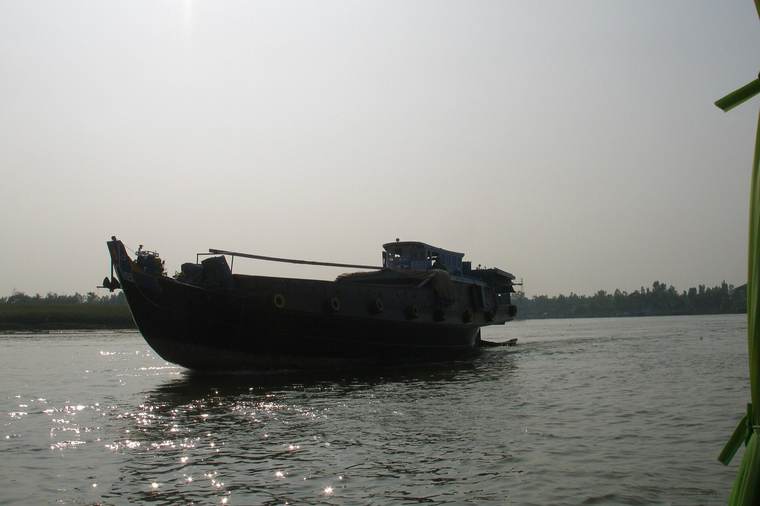
| Boat from Vietnam | Chau Doc → Phnom Penh by fast boat: about 5 hours, with immigration handled on the river at Vinh Xuong / Kaam Samnor. |
| Multi-night cruises | Saigon–Phnom Penh–Siem Reap river ships from roughly US$180+ per person per night, typically 4–8 nights. |
| Best season | November–February: dry, cool, high water still. June–October: wet season, when the Tonle Sap runs backwards and the floodplain fills. |
| The one unmissable thing | The Tonle Sap reversal — a major river that changes direction twice a year, celebrated with the Water Festival in November. |
See Mekong Cambodia tours and live prices
Phnom Penh: the four faces
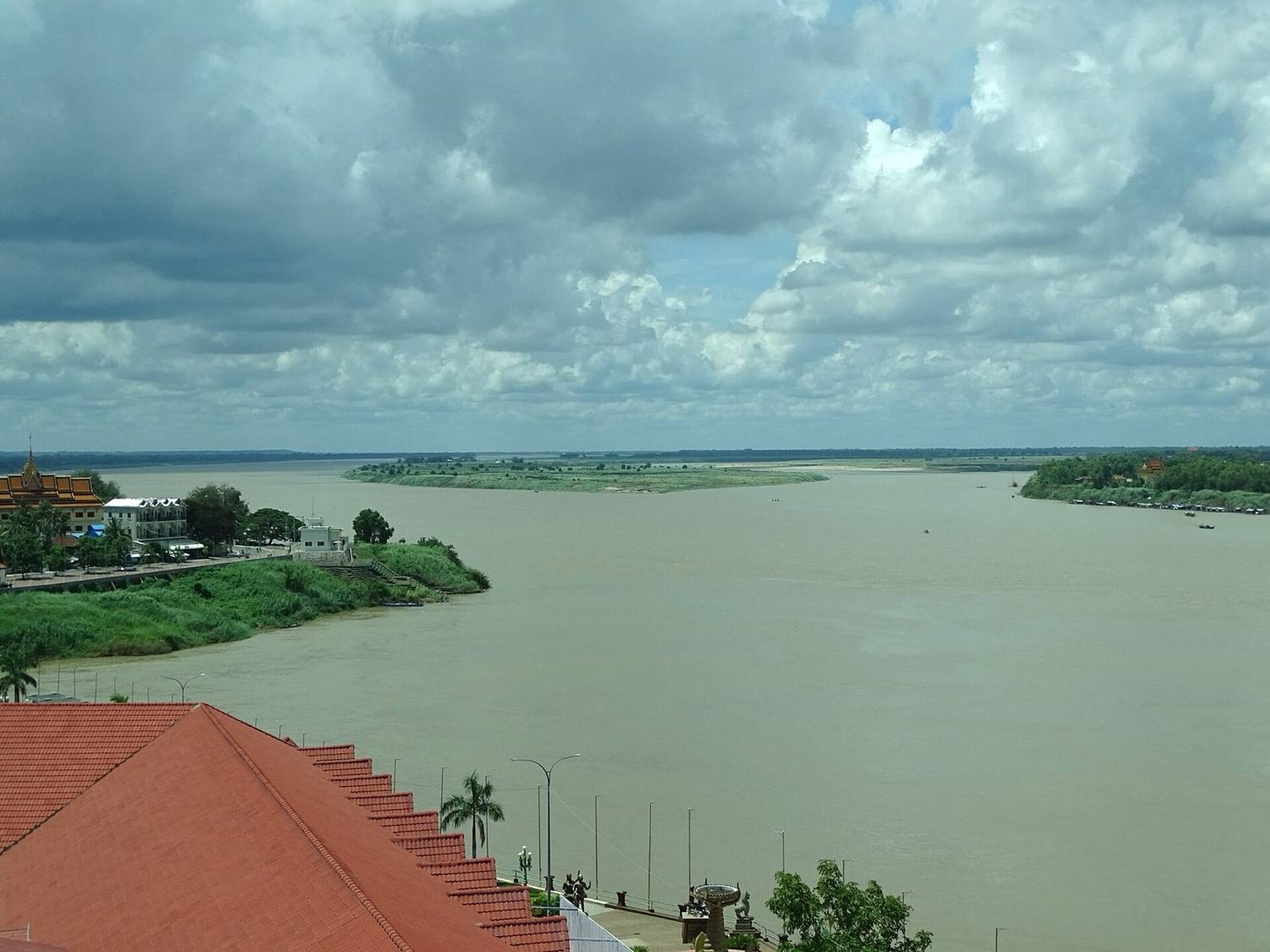
Phnom Penh sits at Chaktomuk — "four faces" — the junction where the Mekong meets the Tonle Sap and then splits again into the Mekong proper and the Bassac. Stand on Sisowath Quay in front of the Royal Palace and you are looking at one of the most consequential river junctions in Asia.
The Tonle Sap reversal
For most of the year the Tonle Sap river drains the Great Lake into the Mekong. From around June, monsoon rains and Himalayan snowmelt raise the Mekong faster than the lake can discharge, and the Tonle Sap is pushed backwards. Water floods upstream into the lake, which swells several times over in area and becomes one of the most productive inland fisheries in the world. Around late October or November the Mekong falls, the river turns again, and the lake drains.
The turning is marked by Bon Om Touk, the Water Festival — three days of longboat racing on the Phnom Penh riverfront, usually in November, drawing enormous crowds. If your dates coincide, book accommodation well ahead.
What to do on the water
- Sunset cruise from Sisowath Quay. One to two hours, departing around 17:00–17:30. Cheap, easy, and the best view of the Royal Palace and the junction. Shared boats are basic; private hire is not expensive.
- Silk Island (Koh Dach). An island 15 km upstream where households weave silk on wooden looms. Reachable by ferry or on a half-day boat-and-bike tour.
- Koh Oknha Tey and the river villages — quieter, more agricultural, good on a bicycle.
- Dinner cruises — plentiful, variable, and mostly about the food rather than the river.
Kratie and the Irrawaddy dolphins
About 250 km north-east of Phnom Penh, Kratie is a small French-colonial river town and the base for seeing Irrawaddy dolphins (Orcaella brevirostris) — short-beaked, round-headed freshwater dolphins that survive in a handful of deep pools in the Mekong between Kratie and the Lao border.
The population is critically endangered and numbers roughly ninety animals; it has been declining for decades because of gillnet entanglement, habitat change and reduced flows. Seeing them is genuinely moving and genuinely fragile — behave accordingly.
- Where: Kampi pool, about 15 km north of Kratie. Motorbike, tuk-tuk or bicycle from town.
- When: first light or the last two hours before sunset, when the animals surface most and the water is calm.
- How: shared or private boats from the Kampi landing. Boats must keep their distance and cut engines near the pool — a good boatman does this without being asked.
- What you will see: a rolling grey back and a puff of breath, at 30–80 metres. This is not a marine park. Adjust expectations and bring patience.
- Koh Trong — the long island opposite Kratie, with a pomelo-growing village, a floating Vietnamese settlement and lanes made for a bicycle. Ferry from the town waterfront.
Do not book any operator that promises swimming with the dolphins or guarantees close approach. The population is critically endangered, approach distances are regulated for a reason, and pressure from boats is one of the documented stressors on the pods.
Kampong Cham and the bamboo bridge
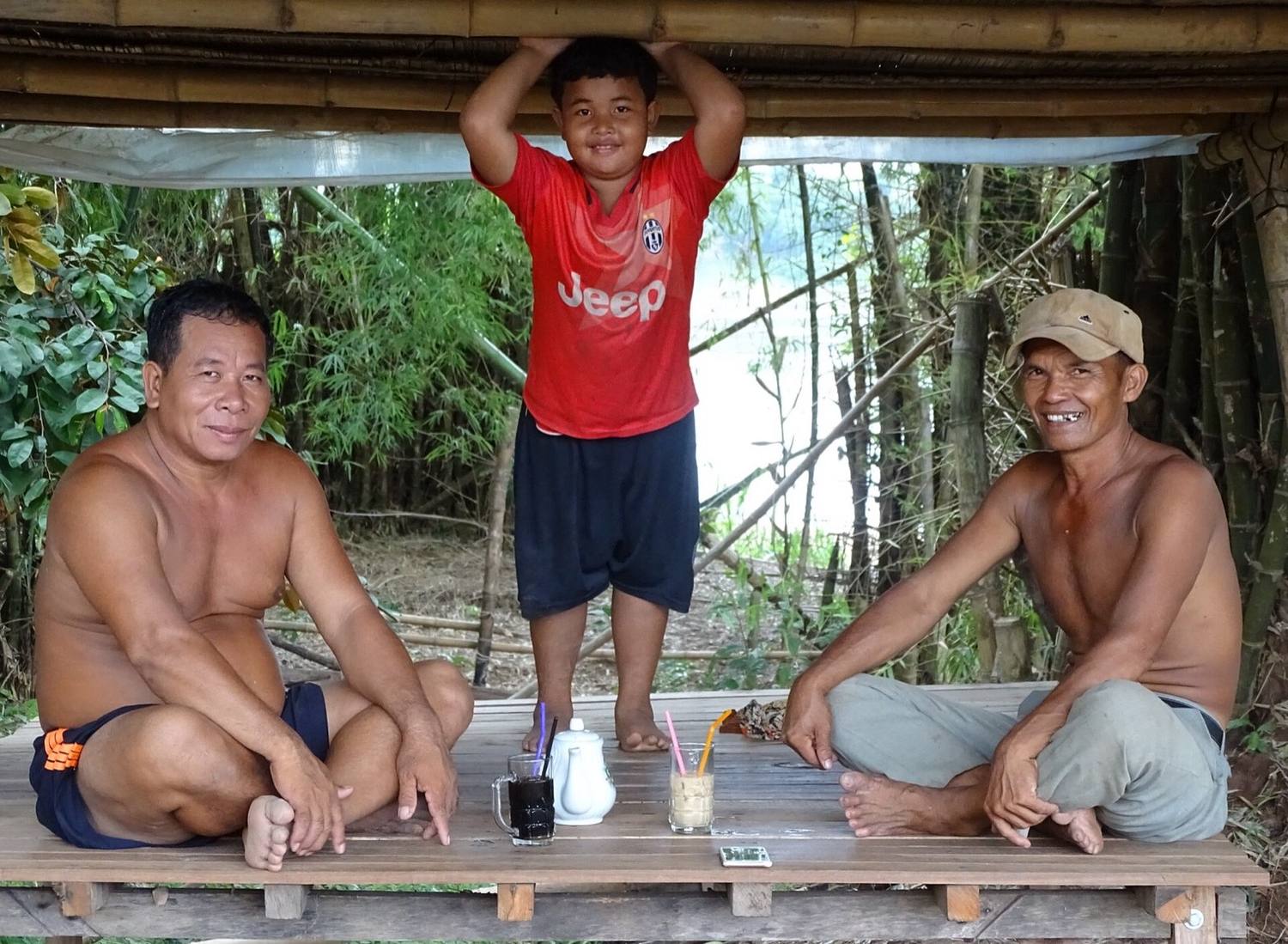
Halfway between Phnom Penh and Kratie, Kampong Cham is the Mekong town most travellers pass through without stopping. It is worth an afternoon.
- The bamboo bridge to Koh Paen. Historically rebuilt by hand every dry season from bamboo and washed away every wet season — one of the more remarkable pieces of vernacular engineering anywhere. Its status has changed as permanent crossings have been built, so check locally before making a special trip.
- Wat Hanchey — a hilltop monastery upstream with pre-Angkorian brick foundations and a long view down the river.
- Phnom Pros and Phnom Srei — "Man Hill" and "Woman Hill", a pair of temple hills with a folk story attached.
- Wat Nokor — an 11th-century sandstone temple with a modern pagoda built inside it.
Stung Treng and the northern river
The last Cambodian town of any size before Laos, at the confluence with the Sekong. Upstream lies a braided stretch of channels, sandbars and flooded forest known for river birds and for the Mekong Discovery Trail, a network of cycling and boat routes set up to give river communities an alternative income to fishing. Remote, slow and rewarding if you have the days.
Ways to see the Cambodian Mekong
Phnom Penh sunset cruise
≈ US$5–15
- 1–2 hours from Sisowath Quay
- Royal Palace and the four-way junction
- Departs ~17:00–17:30
- Shared boats are basic
Best for: everyone in Phnom Penh. It costs less than a cocktail.
Kratie 2-day trip
≈ US$60–150
- Dolphin boat at Kampi at dawn
- Koh Trong island by bicycle
- Colonial river town, no crowds
- 5–6 hours from Phnom Penh by road
Best for: travellers with two spare days who want the river rather than the temples.
Chau Doc → Phnom Penh boat
≈ US$35–70
- About 5 hours on the river
- Border formalities done on the water
- Replaces a long bus day
- Visa arrangements are your responsibility
Best for: anyone travelling Vietnam → Cambodia who wants the crossing to be part of the trip.
Multi-night river cruise
from ≈ US$180 / night
- Saigon → Phnom Penh → Siem Reap
- 4–8 nights, en-suite cabins, full board
- Guided shore excursions daily
- Low water in March–May can alter routes
Best for: travellers doing Vietnam and Cambodia together, slowly.
Timing is everything
| Season | Months | What it means on the river |
|---|---|---|
| Cool dry | Nov–Feb | Best overall. Water still high after the flood, comfortable temperatures, clear skies. Water Festival in November. |
| Hot dry | Mar–May | Levels at their lowest; sandbars exposed; cruise itineraries sometimes shortened. Very hot inland. |
| Wet | Jun–Oct | Tonle Sap runs backwards, floodplain forests fill, landscape at its greenest. Afternoon rain most days. |
- Dolphins: visible year-round; easiest to spot in the dry season when they concentrate in deep pools.
- Best light: the Cambodian Mekong runs broadly north–south, so sunrise and sunset both work from the banks. Phnom Penh's quay faces east — go at dawn for the river, at dusk for the palace.
- Avoid: the days around Khmer New Year (mid-April) and Pchum Ben for transport, when the whole country moves at once.
Getting there
| Route | Time | Notes |
|---|---|---|
| Ho Chi Minh City → Phnom Penh (bus) | 6–7 h | Frequent; land border at Bavet / Moc Bai. |
| Chau Doc → Phnom Penh (boat) | ~5 h | River crossing at Vinh Xuong / Kaam Samnor. The scenic option. |
| Phnom Penh → Kampong Cham | ~3 h | Bus or minivan. |
| Phnom Penh → Kratie | 5–6 h | Bus or shared minivan; roads are decent. |
| Kratie → Stung Treng | ~3 h | Onward to the Lao border at Trapeang Kriel. |
| Phnom Penh → Siem Reap | 5–6 h road | Boat services across the Tonle Sap run seasonally and are weather-dependent. |
Check your visa requirements before taking the river border. Cambodia offers e-visa and visa-on-arrival for many nationalities, but the Kaam Samnor river post has historically had a reputation for informal "processing fees". Have exact cash, ask for a receipt, and stay polite.
How to save
- Take the public sunset boat at Sisowath Quay rather than a hotel-arranged dinner cruise. It costs a fraction and the river is identical.
- Share a dolphin boat. Boats at Kampi are priced per boat with a passenger cap; arrive at the same time as other travellers and split it.
- Bicycle on Koh Trong and Koh Dach instead of taking guided tours — both islands are small, flat and rent bikes for a couple of dollars.
- Bus, don't fly, between Phnom Penh and Siem Reap or Kratie; distances are short and roads are reasonable.
- Travel Vietnam → Cambodia by river only if you want the experience. The bus is cheaper and faster; the boat is the better day.
Frequently asked questions
Where can you see the Mekong River in Cambodia?
Phnom Penh sits at the junction of the Mekong, Tonle Sap and Bassac and is the easiest place to get on the water. Upstream, Kampong Cham, Kratie and Stung Treng all sit directly on the river, with Kratie offering the Irrawaddy dolphin pools at Kampi.
How much is a Mekong sunset cruise in Phnom Penh?
Shared one to two-hour cruises from Sisowath Quay cost roughly US$5–15 per person, usually departing around 17:00–17:30. Private boats run about US$25–50 for the whole boat, and dinner cruises cost more.
Can you see freshwater dolphins on the Mekong in Cambodia?
Yes — Irrawaddy dolphins survive in deep pools between Kratie and the Lao border, most reliably at Kampi about 15 km north of Kratie. The population is critically endangered at roughly ninety animals, so boats keep their distance and sightings are of a rolling back at 30–80 metres, not close encounters.
Why does the Tonle Sap river flow backwards?
From around June the monsoon and snowmelt raise the Mekong faster than the Tonle Sap lake can drain into it, so the connecting river reverses and floods water upstream into the lake, expanding it several times over. Around November the Mekong falls and the river turns again — an event marked by the Bon Om Touk water festival.
Can you take a boat from Vietnam to Cambodia on the Mekong?
Yes. Fast boats run from Chau Doc in An Giang to Phnom Penh in about five hours, with immigration handled on the river at the Vinh Xuong / Kaam Samnor crossing. Several multi-night cruise lines run the same route more slowly.
What is the best time to visit the Cambodian Mekong?
November to February — dry, comfortable and with water levels still high after the flood. March to May is very hot and levels are at their lowest; June to October is wet but shows you the flooded landscape and the reversed Tonle Sap.
Is Kratie worth visiting?
Yes, if you have two spare days and want the river rather than temples. It combines a dawn dolphin boat, a French-colonial waterfront and Koh Trong island, which is flat, quiet and made for a bicycle. It is five to six hours from Phnom Penh by road.